 1915 DC
- Home
- Timeline
1900–1930 · 38 entries
Timeline
Thirty years in which Washington grew from 278,718 people to nearly half a million, rebuilt its Mall and lived through a war, a pandemic and a riot. Photographs appear where we have one of the event itself.
The 1900s
-
1900
A city of 278,718
The census counts 278,718 people in the District of Columbia. Washington is a low city of brick rowhouses, horse-drawn wagons and electric streetcars, with the Capitol dome and the Washington Monument standing well above everything else.
Checked against: Wikipedia, “Demographics of Washington, D.C.”
-
1901
March 1901
The McMillan Commission
The Senate Park Commission, chaired by Senator James McMillan, with Daniel Burnham, Charles McKim, Augustus Saint-Gaudens and Frederick Law Olmsted Jr., begins work on a new plan for the Mall and the city's parks. Its report of 1902 guides much of what is built on the Mall over the following decades.
Place: The Mall · Checked against: Wikipedia, “McMillan Plan”
-
1902
The White House gets a West Wing
Theodore Roosevelt's renovation by McKim, Mead & White clears offices out of the residence and puts them in a new, low "temporary" office building west of the house: the beginning of the West Wing.
Place: The White House and Lafayette Square · Checked against: Wikipedia, “West Wing”
-
1907
October 27, 1907
Union Station opens
The first passenger train arrives at Daniel Burnham's Union Station. Its opening lets the railroads give up the old Baltimore and Potomac station on the Mall, as the McMillan plan proposed.
Place: Union Station · Checked against: Wikipedia, “Washington Union Station”
-
1907
September 29, 1907
Foundation stone of the National Cathedral
President Theodore Roosevelt attends the laying of the foundation stone of the Cathedral Church of St. Peter and St. Paul on Mount St. Alban. The cathedral will take 83 years to finish.
Checked against: Wikipedia, “Washington National Cathedral”
-
1908
September 17, 1908
Flight trials at Fort Myer
Orville Wright demonstrates the Wright Flyer to the Army at Fort Myer, just across the Potomac. On September 17 the aircraft crashes, killing Lieutenant Thomas Selfridge, the first person to die in an aeroplane crash. Wright is badly injured and spends seven weeks in hospital.
Checked against: Wikipedia, “Thomas Selfridge”
-
1909
March 4, 1909
Taft is inaugurated in a blizzard
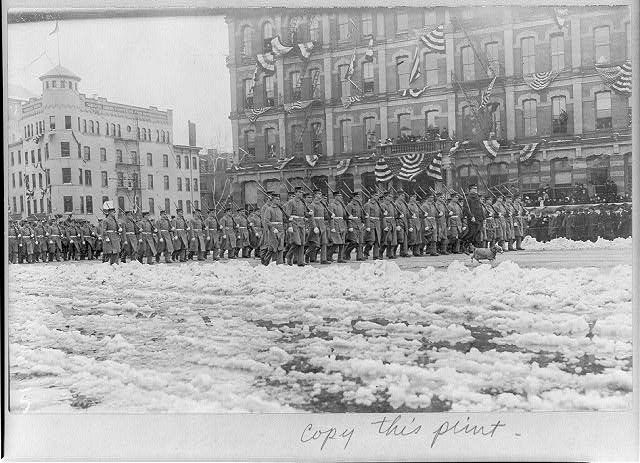
A blizzard the night before leaves the city under ten inches of snow, and William Howard Taft takes the oath in the Senate chamber instead of outdoors. The parade goes ahead after thousands of city workers clear the route.
Place: The Capitol · Checked against: Wikipedia, “Inauguration of William Howard Taft”
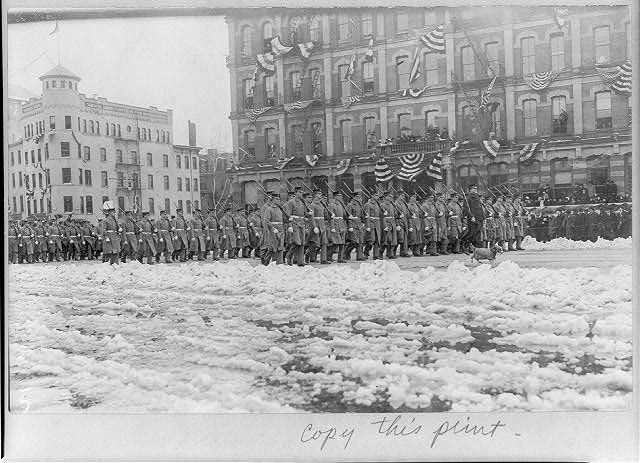
March 4, 1909 U.S. Marines march up a snowbound Pennsylvania Avenue in Taft's inaugural parade, 1909, with their dog mascot out in front. Pennsylvania AvenueBain News Service, Library of Congress · PRES FILE [item] [P&P] · No known restrictions on publication -
1909
May 1909
Walter Reed General Hospital opens
The Army opens its new general hospital on Georgia Avenue, named for Walter Reed, the Army physician whose work showed that yellow fever is carried by mosquitoes.
Checked against: Wikipedia, “Walter Reed Army Medical Center”
The 1910s
-
1910
A new museum on the Mall
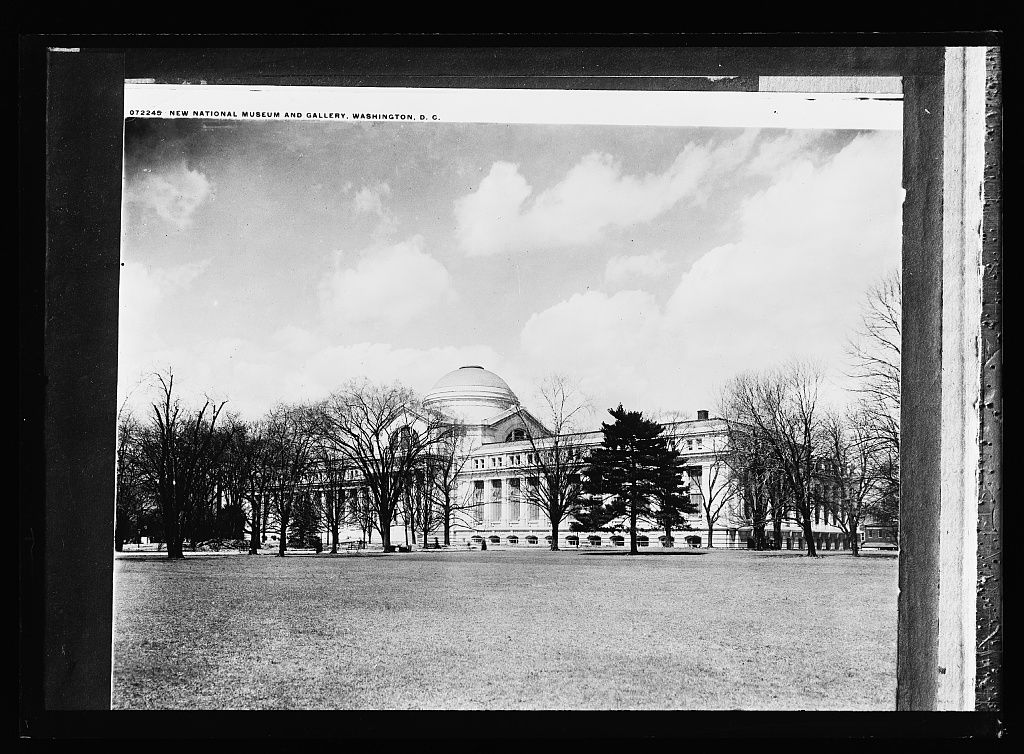
The Smithsonian's new National Museum, today's National Museum of Natural History, opens to the public in March: the first building on the north side of the Mall built to the McMillan plan. In June, Congress passes the Height of Buildings Act, which still keeps the city low.
Place: The Mall · Checked against: Wikipedia, “National Museum of Natural History”
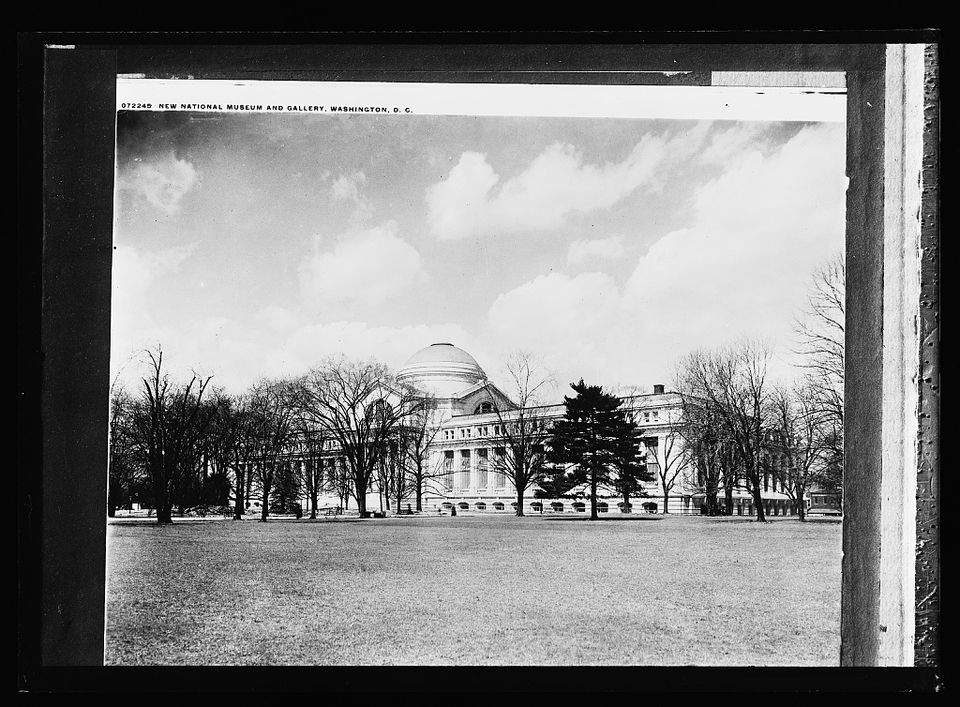
c. 1910–15 The new National Museum (now the Museum of Natural History) across the Mall, about 1912. The MallDetroit Publishing Company, Library of Congress · LC-D418-72245 [P&P] · No known restrictions on publication -
1911
March 17, 1911
The ballpark burns
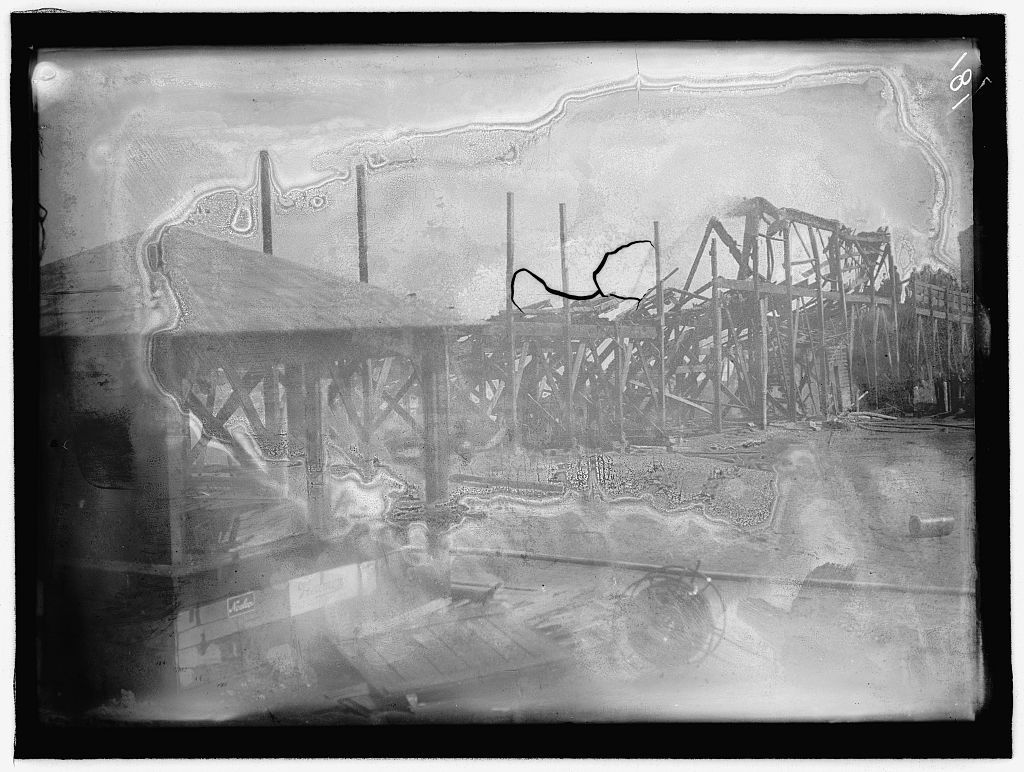
The wooden ballpark of the Washington Senators at Georgia Avenue and Florida Avenue, known as National Park, burns down. A steel-and-concrete grandstand is ready on the same site for Opening Day; the park is renamed Griffith Stadium in 1923.
Checked against: Wikipedia, “Griffith Stadium”
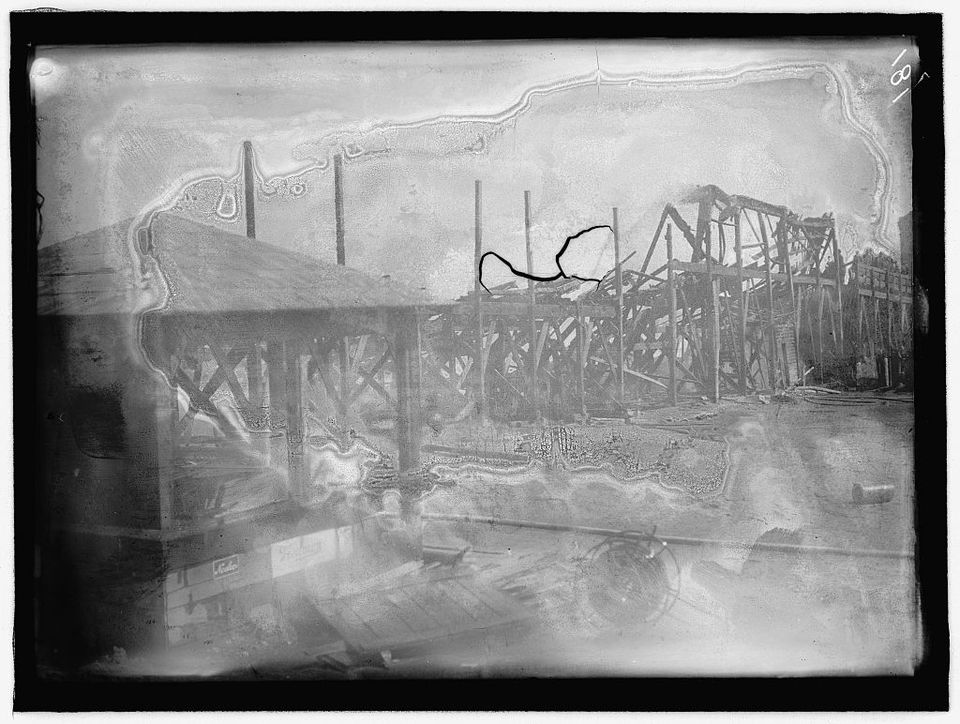
1911 The charred wreck of the wooden grandstand after National Park burned, March 17, 1911. Griffith StadiumHarris & Ewing Collection, Library of Congress · LC-H261- 181 [P&P] · No known restrictions on publication -
1912
March 27, 1912
The first cherry trees
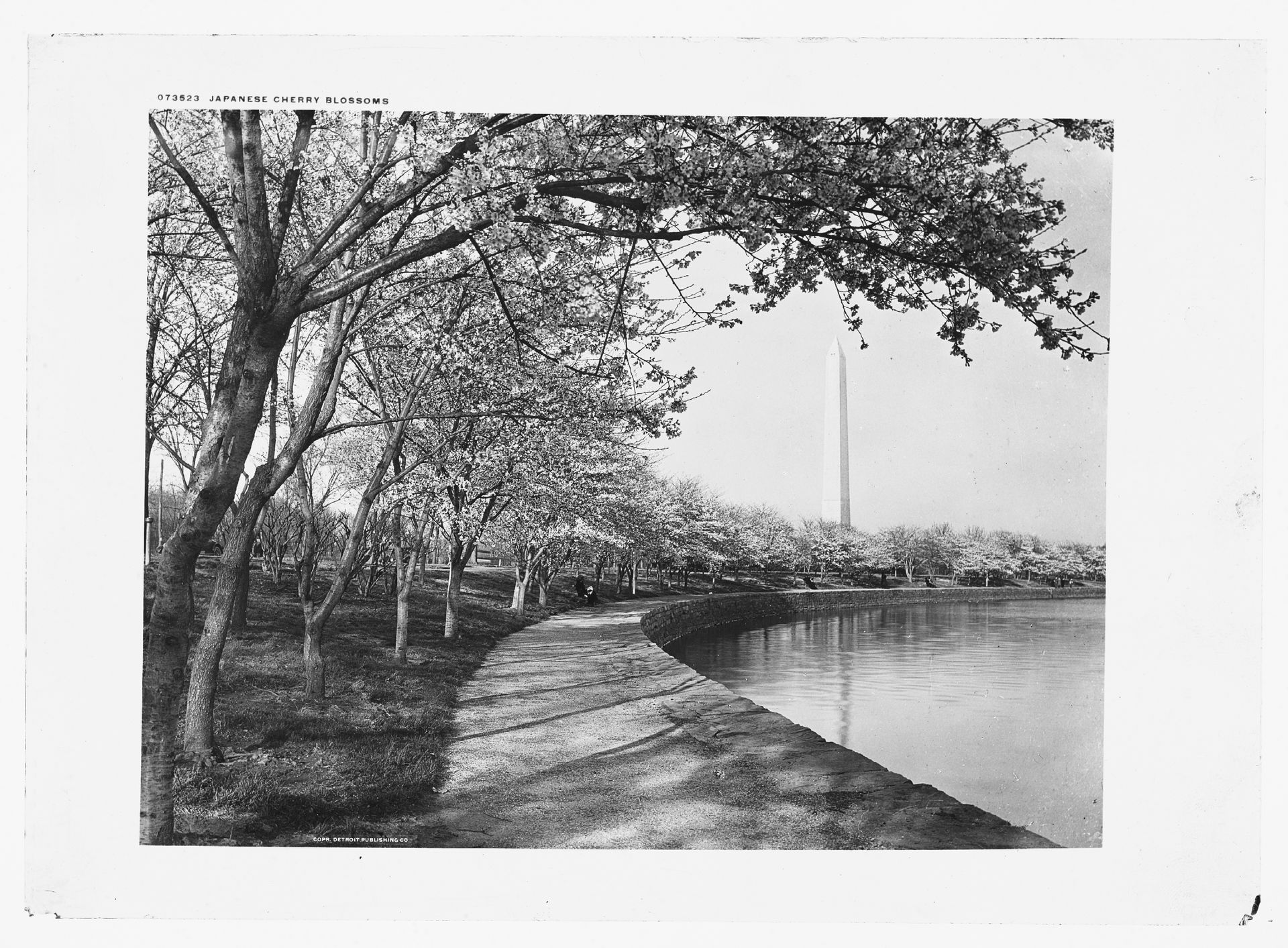
First Lady Helen Taft and Viscountess Chinda, wife of the Japanese ambassador, plant the first two of 3,020 cherry trees given by the city of Tokyo, on the north bank of the Tidal Basin. An earlier gift of 2,000 trees had arrived diseased in 1910 and been burned.
Place: The Tidal Basin and Potomac Park · Checked against: Wikipedia, “National Cherry Blossom Festival”
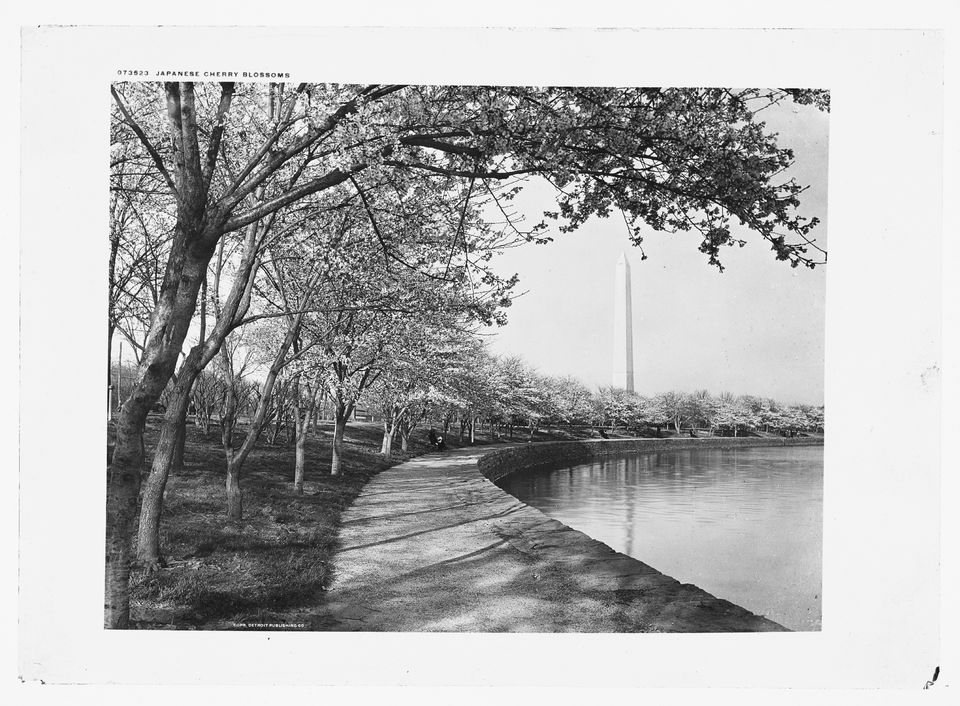
c. 1912–15 The Japanese cherry trees in blossom along the Tidal Basin, with the Washington Monument in the distance. The Tidal Basin and Potomac ParkDate checked: The Library dates this 1900–1915, but the Tidal Basin cherry trees were planted in March 1912.Detroit Publishing Company, Library of Congress · LC-D418-73523 [P&P] · No known restrictions on publication -
1912
June 8, 1912
Columbus Fountain dedicated
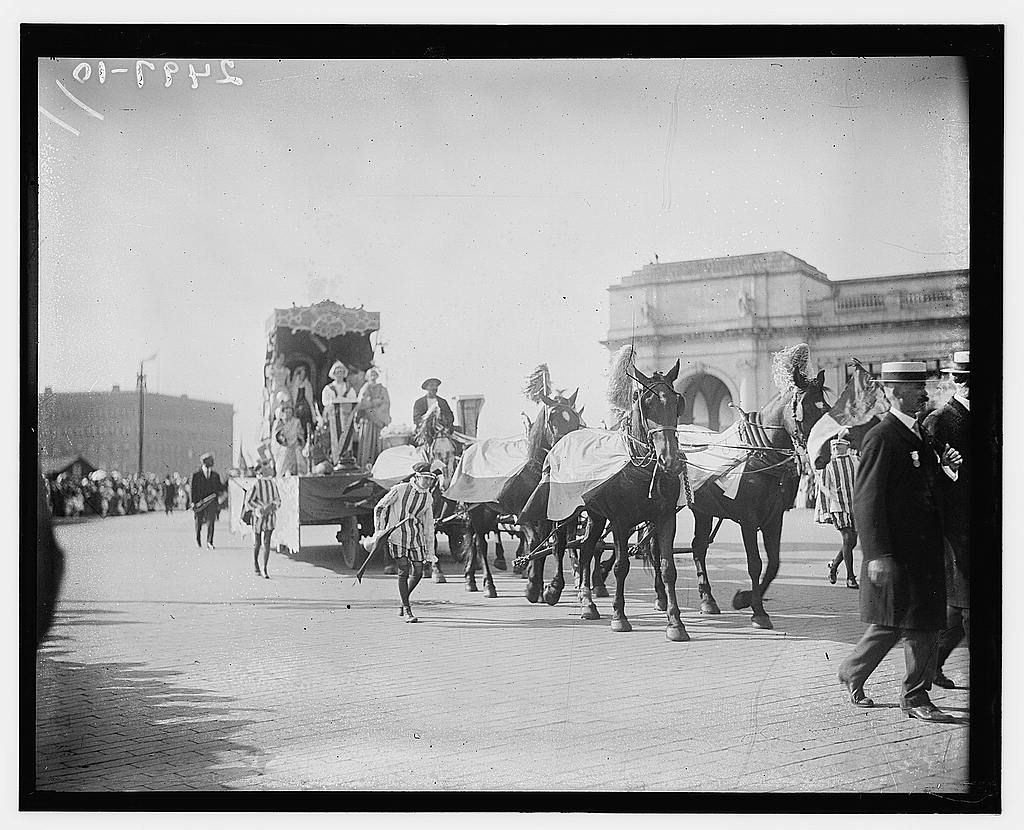
Lorado Taft's Columbus Fountain is dedicated in the plaza in front of Union Station, in three days of celebrations; President Taft reviews the parade from a stand on the plaza.
Place: Union Station · Checked against: Wikipedia, “Columbus Fountain”
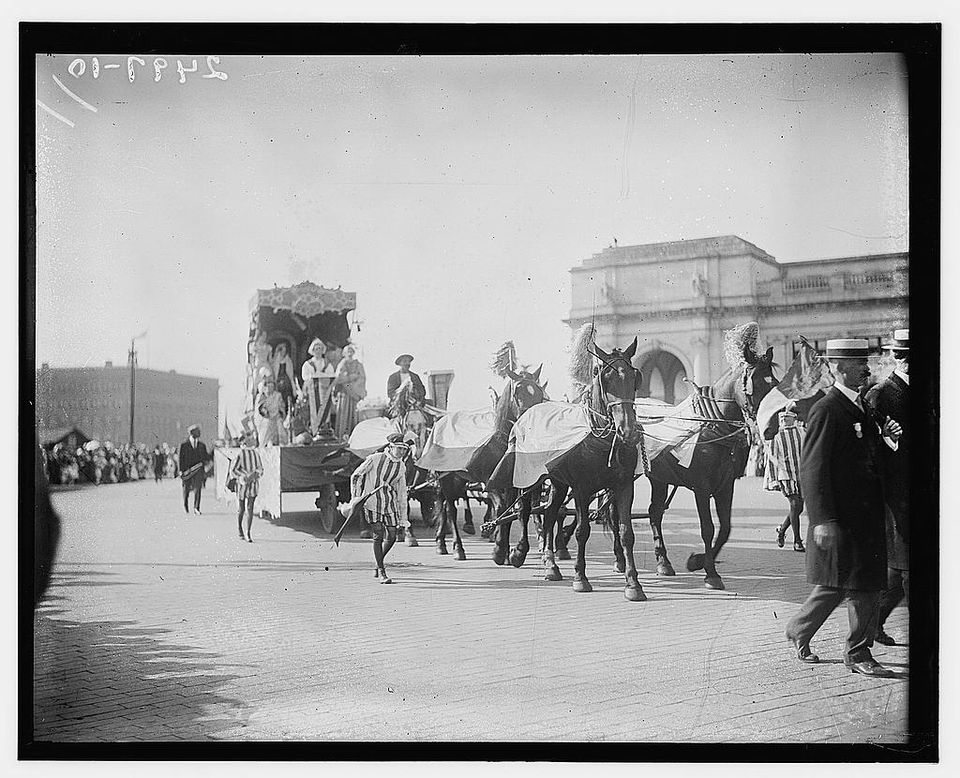
June 8, 1912 A Knights of Columbus float, "Columbus before the King", passes Union Station during the fountain's dedication parade, June 8, 1912. Union StationBain News Service, Library of Congress · LC-B2- 2497-10 [P&P] · No known restrictions on publication -
1913
March 3, 1913
The Woman Suffrage Procession
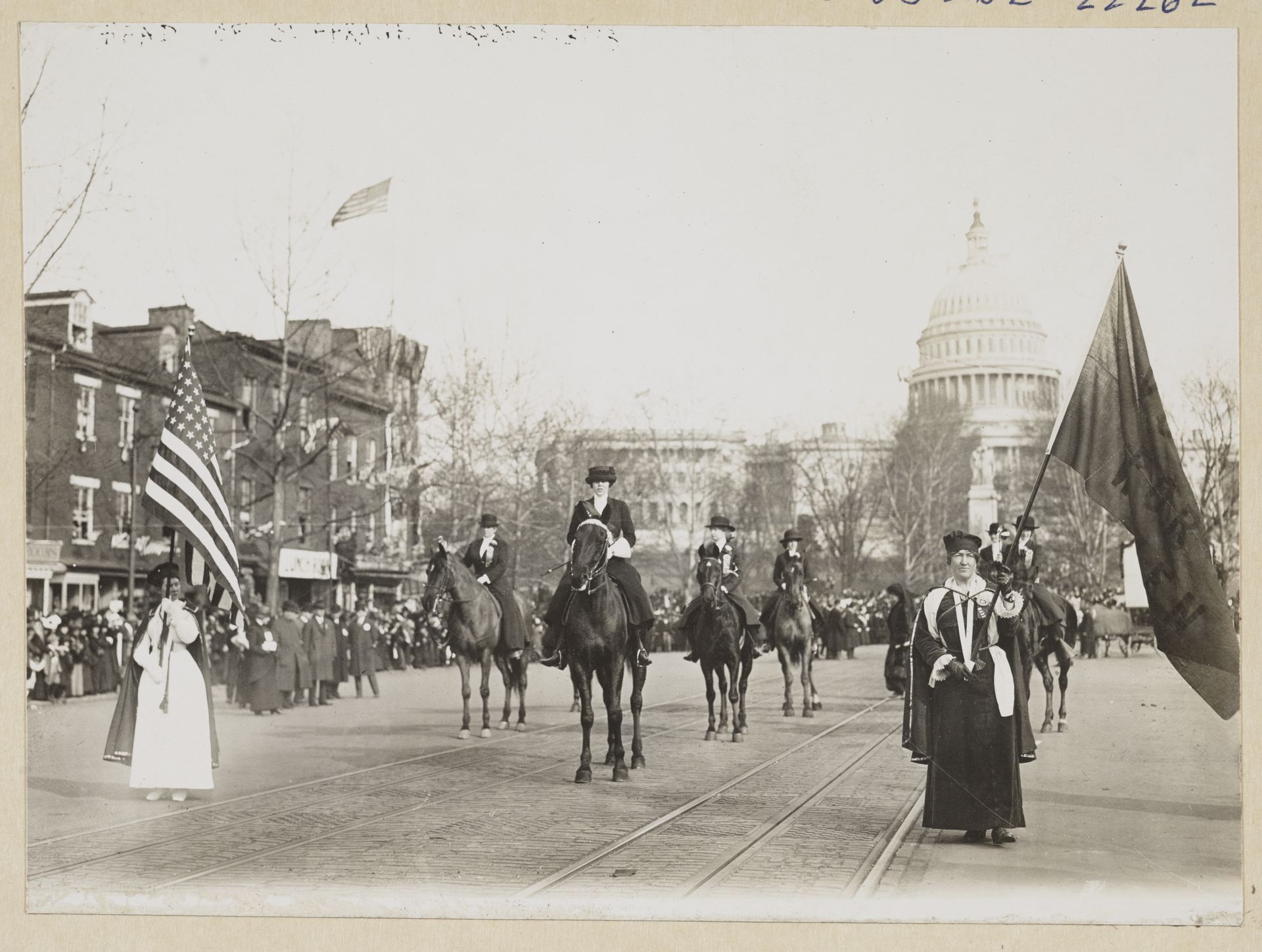
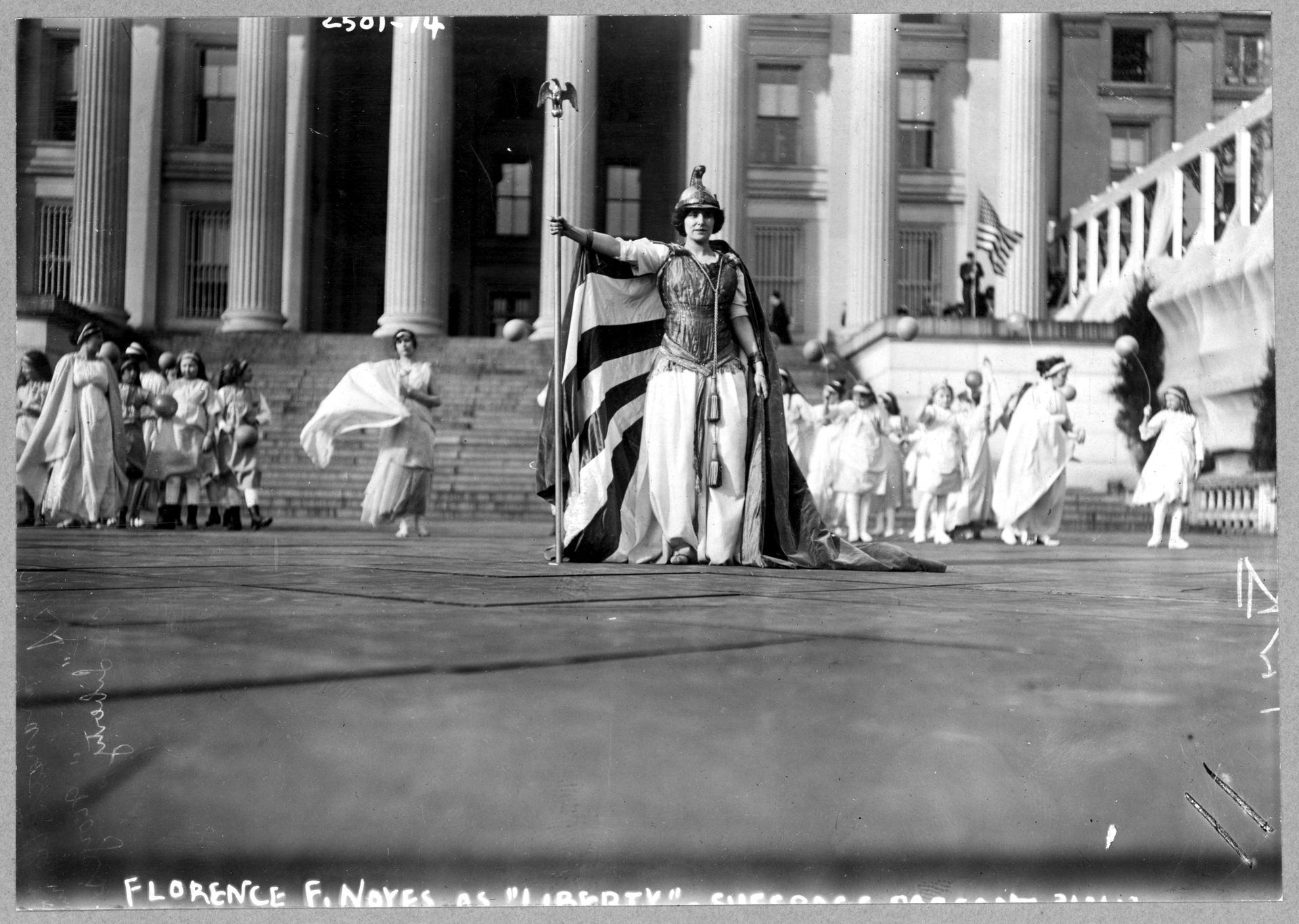
On the day before Woodrow Wilson's inauguration, a procession organised by Alice Paul and Lucy Burns brings 5,000 to 10,000 marchers, with floats, bands and mounted brigades, down Pennsylvania Avenue for votes for women, while an allegorical pageant is staged on the Treasury steps. Crowds pour into the street and harass the marchers; police do little, cavalry from Fort Myer are brought in, and more than two hundred people are treated in hospital. Ida B. Wells, told to march in a separate section with other Black women, joins the Illinois delegation instead. The violence brings the cause national attention and Senate hearings.
Place: Pennsylvania Avenue · Checked against: Wikipedia, “Woman Suffrage Procession”
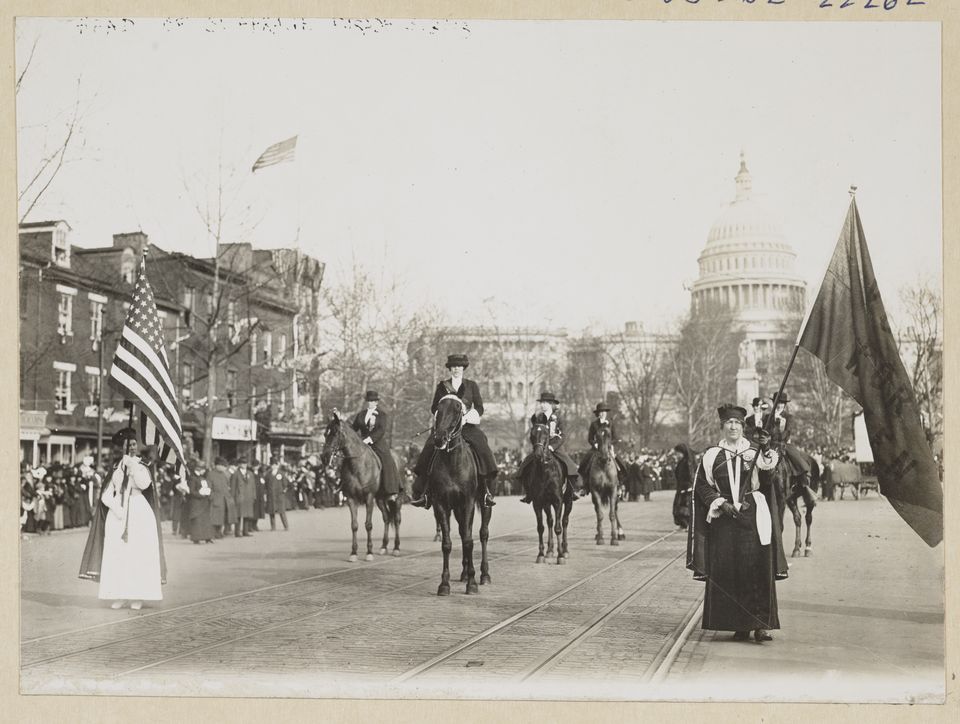
March 3, 1913 The head of the Woman Suffrage Procession on Pennsylvania Avenue, March 3, 1913, with mounted marshals, banners and the Capitol beyond. Pennsylvania AvenueBain News Service, Library of Congress · LOT 11052-2 [item] [P&P] · No known restrictions on publication 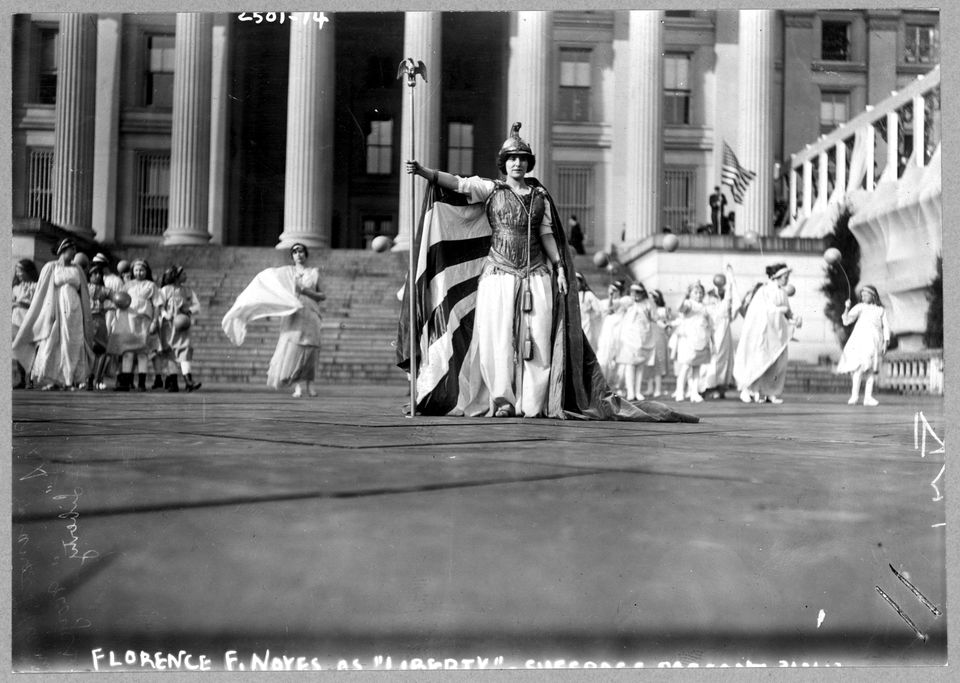
1913 Hedwig Reicher as Columbia on the Treasury steps, in the allegorical pageant staged during the 1913 suffrage procession. The TreasuryBain News Service, Library of Congress · LOT 11052-2 <item> · No known restrictions on publication -
1913
March 4, 1913
Wilson takes office
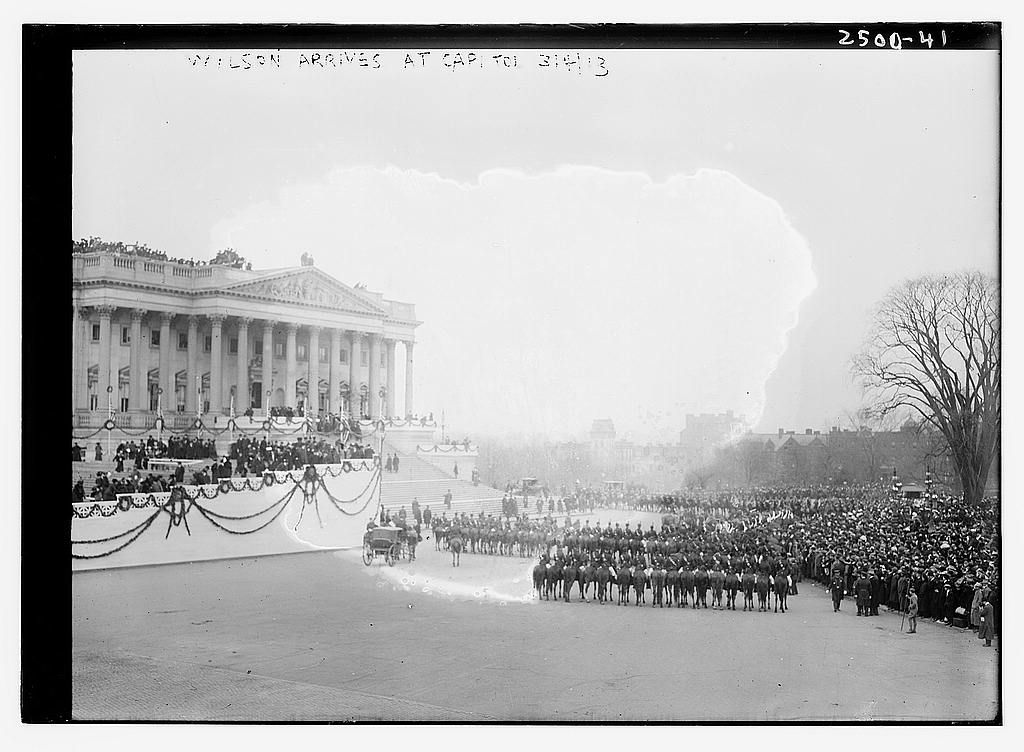
Woodrow Wilson is inaugurated on the Capitol's east front. In the following months his administration allows the segregation of federal offices in Washington, including the Post Office and Treasury departments, over protests from Black civil-rights leaders.
Place: The Capitol · Checked against: Wikipedia, “Woodrow Wilson and race”
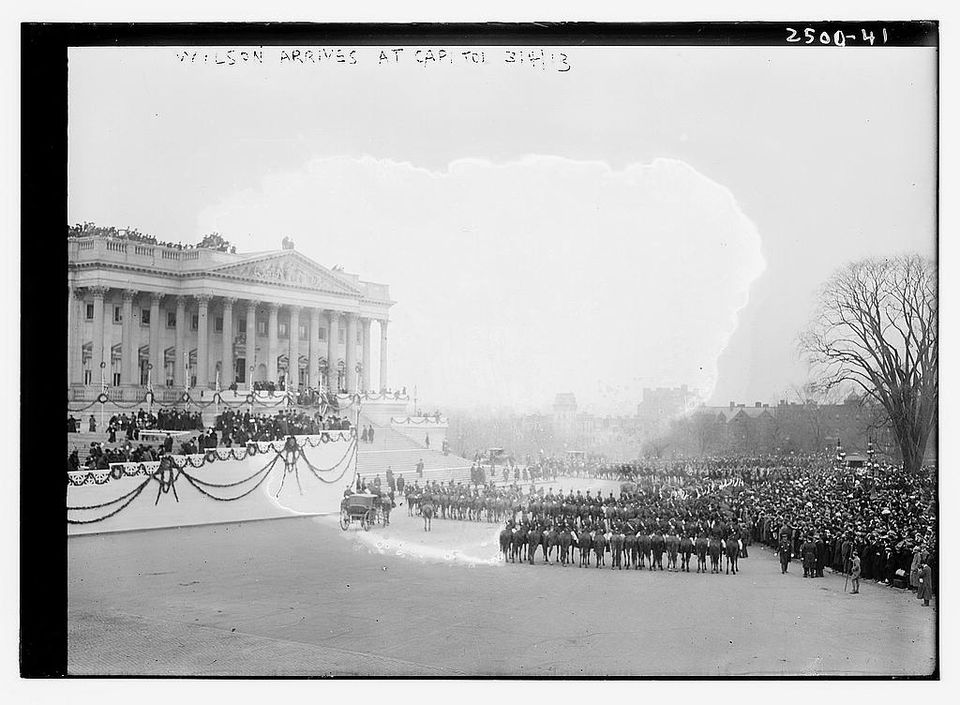
March 4, 1913 Woodrow Wilson arrives at the Capitol for his inauguration, March 4, 1913, as troops line the East Plaza. The CapitolBain News Service, Library of Congress · LC-B2- 2500-41 [P&P] · No known restrictions on publication -
1914
February 12, 1914
Ground broken for the Lincoln Memorial
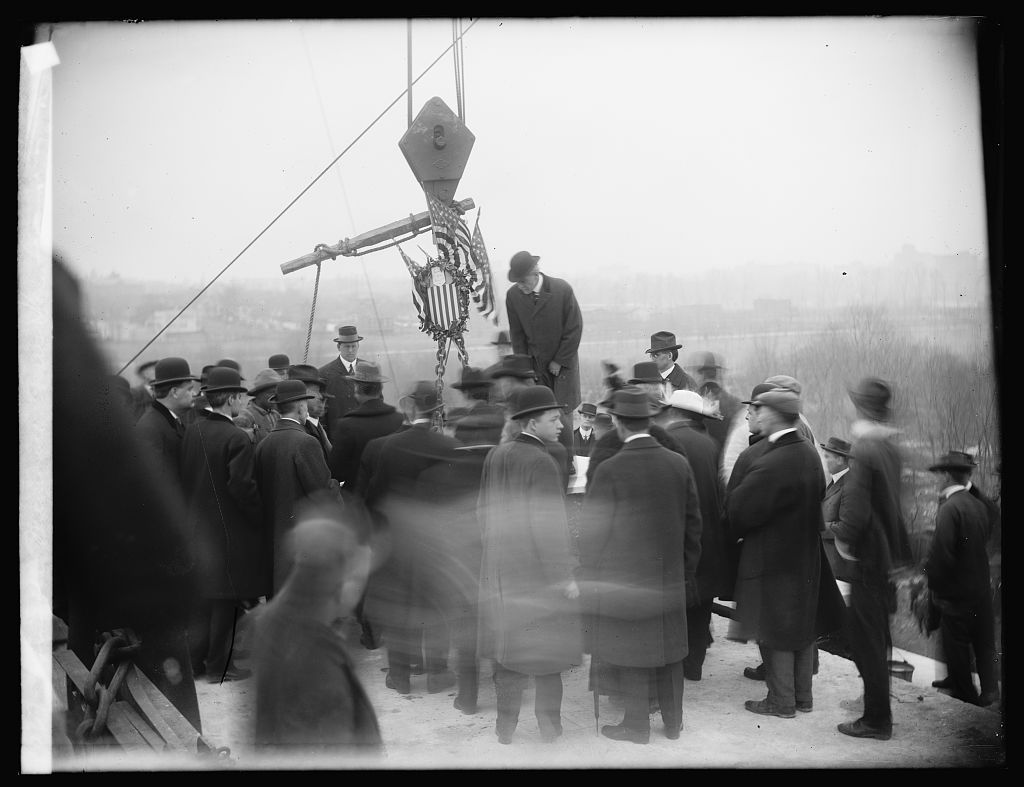
On Lincoln's birthday, ground is broken on reclaimed land in West Potomac Park, west of the Washington Monument. Construction of Henry Bacon's memorial gets under way the following year.
Place: The Lincoln Memorial · Checked against: Wikipedia, “Lincoln Memorial”
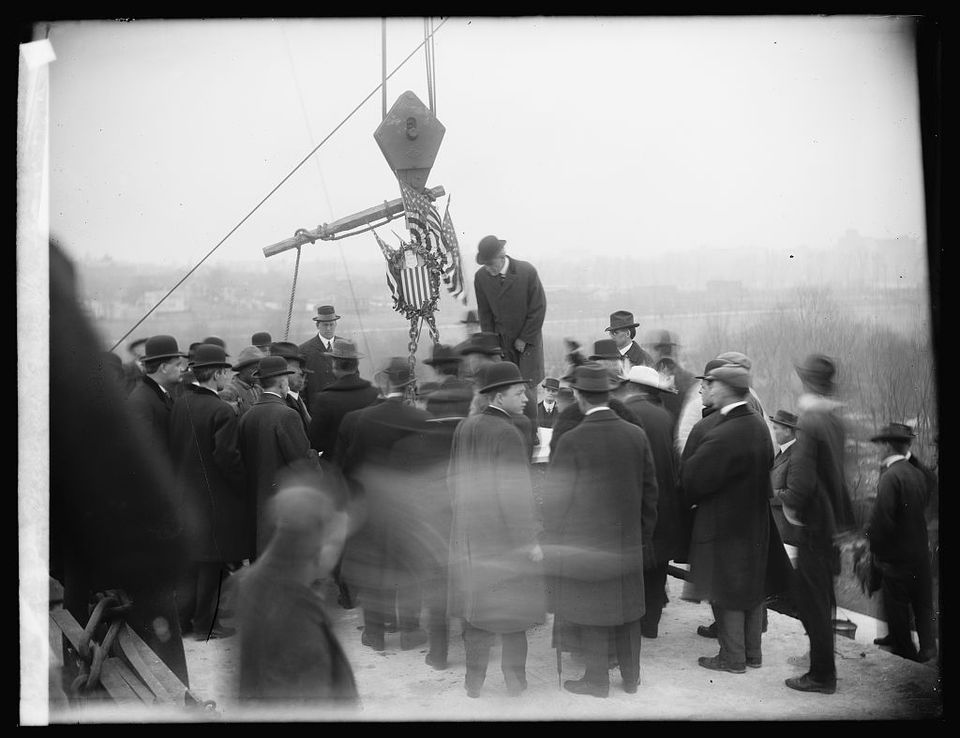
February 12, 1915 A crowd watches the cornerstone of the Lincoln Memorial swing into place, February 12, 1915. The Lincoln MemorialDate checked: The Library dates this only to 1910–1926; the Lincoln Memorial's cornerstone was laid on February 12, 1915.National Photo Company Collection, Library of Congress · LC-F82- 1037 [P&P] · No known restrictions on publication -
1915
September 1915
The Grand Army marches again
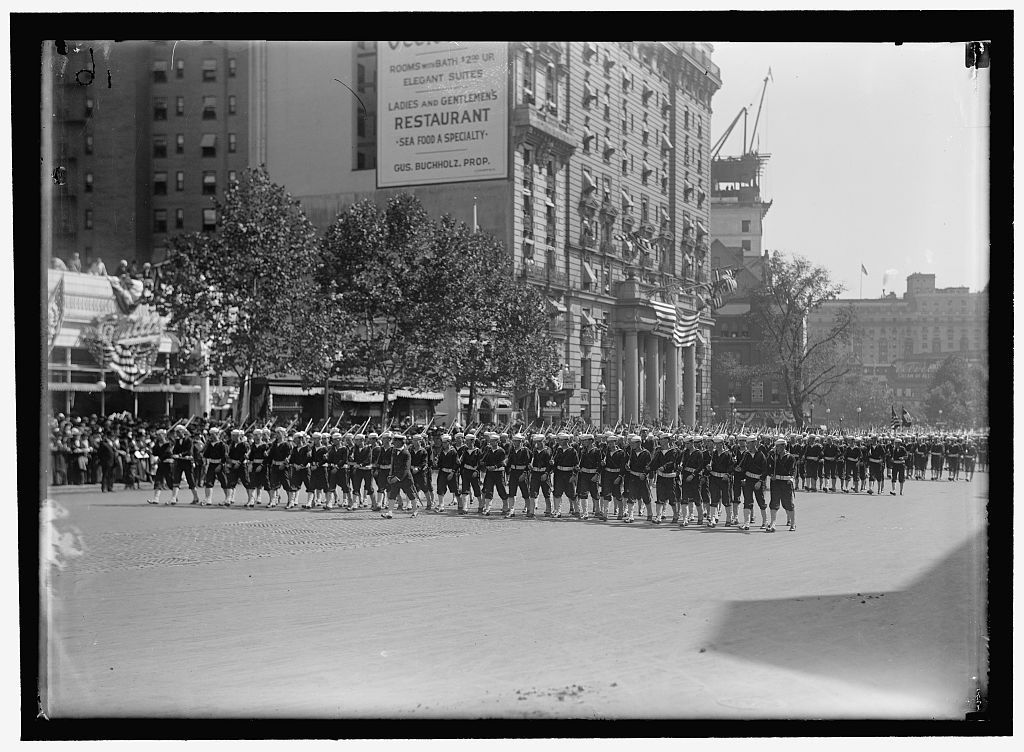
Union veterans of the Civil War hold their national encampment in Washington and parade down Pennsylvania Avenue, fifty years after the Grand Review of the Armies of 1865.
Place: Pennsylvania Avenue · Checked against: Wikipedia, “Grand Army of the Republic”
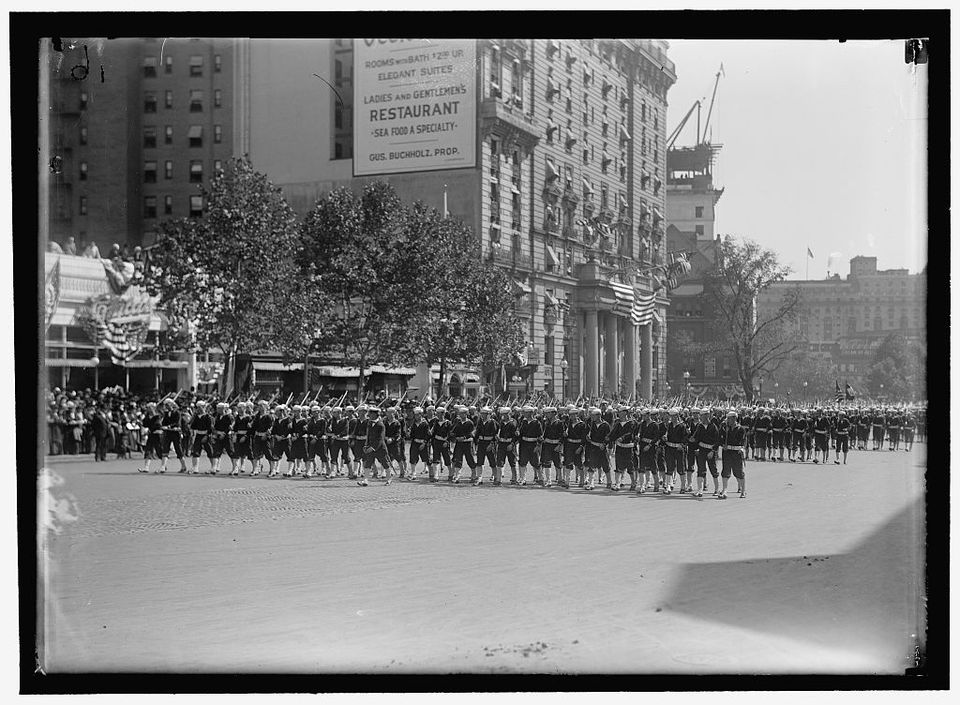
1915 Union veterans parade up Pennsylvania Avenue at the Grand Army of the Republic encampment, September 1915. Pennsylvania AvenueHarris & Ewing Collection, Library of Congress · LC-H261- 5545 [P&P] · No known restrictions on publication -
1917
January 10, 1917
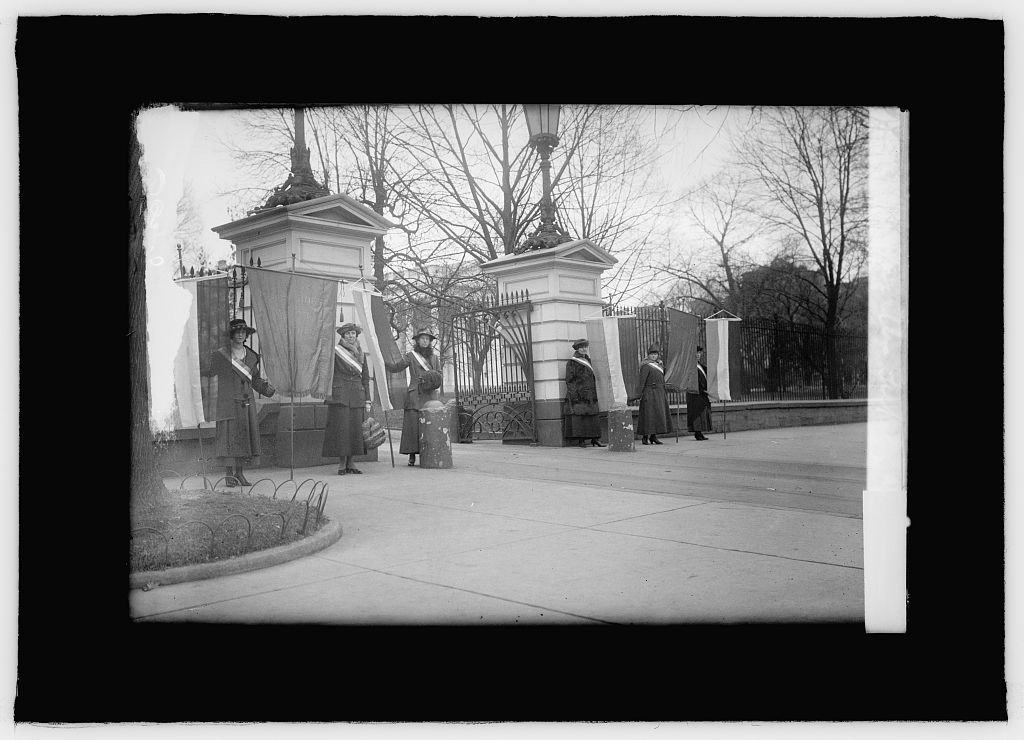
The Silent Sentinels
Members of the National Woman's Party begin picketing the White House gates with banners. After the United States enters the war, picketers are arrested from June onward; many are jailed in the District Jail or the Occoquan Workhouse in Virginia, and hunger strikers are force-fed.
Place: The White House and Lafayette Square · Checked against: Wikipedia, “Silent Sentinels”
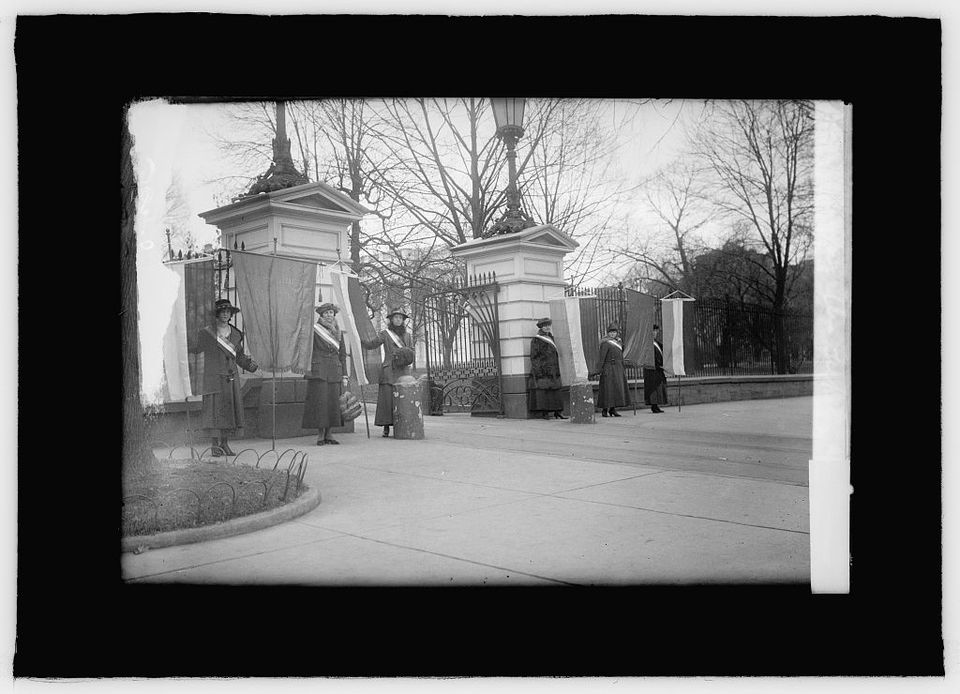
c. 1909–20 Suffragists picket the White House gates with banners. The White House and Lafayette SquareNational Photo Company Collection, Library of Congress · LC-F81- 3648 [P&P] · No known restrictions on publication -
1917
April 2-6, 1917
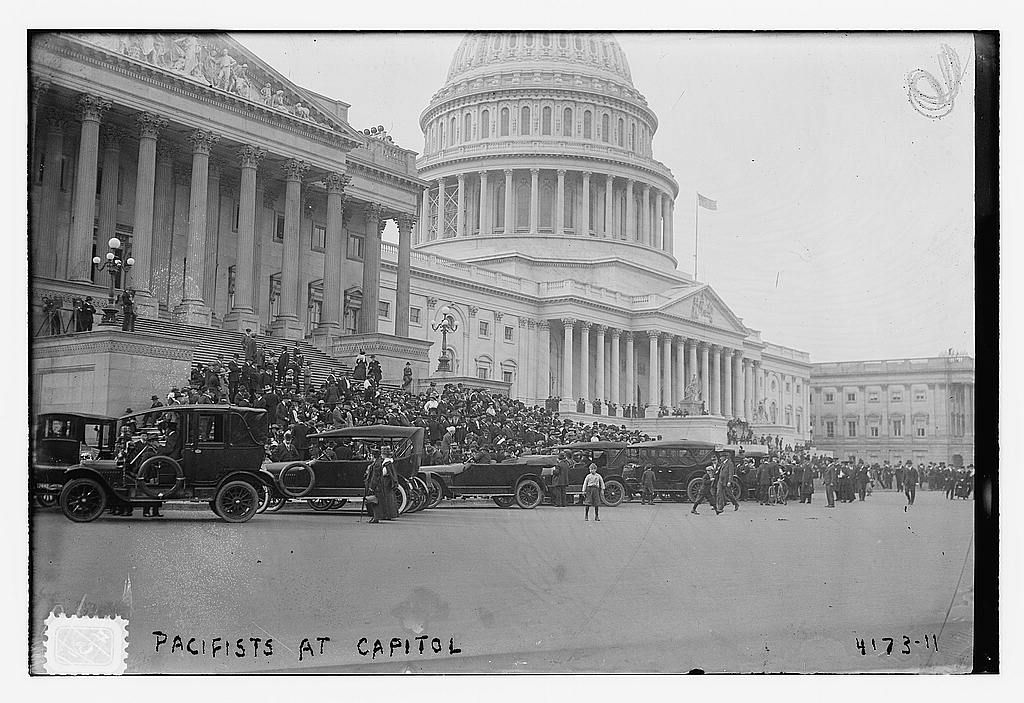
The United States goes to war
Wilson asks Congress for a declaration of war against Germany on April 2; it passes on April 6. Washington fills with new government workers, and temporary office buildings go up on the Mall and in Potomac Park.
Checked against: Wikipedia, “American entry into World War I”
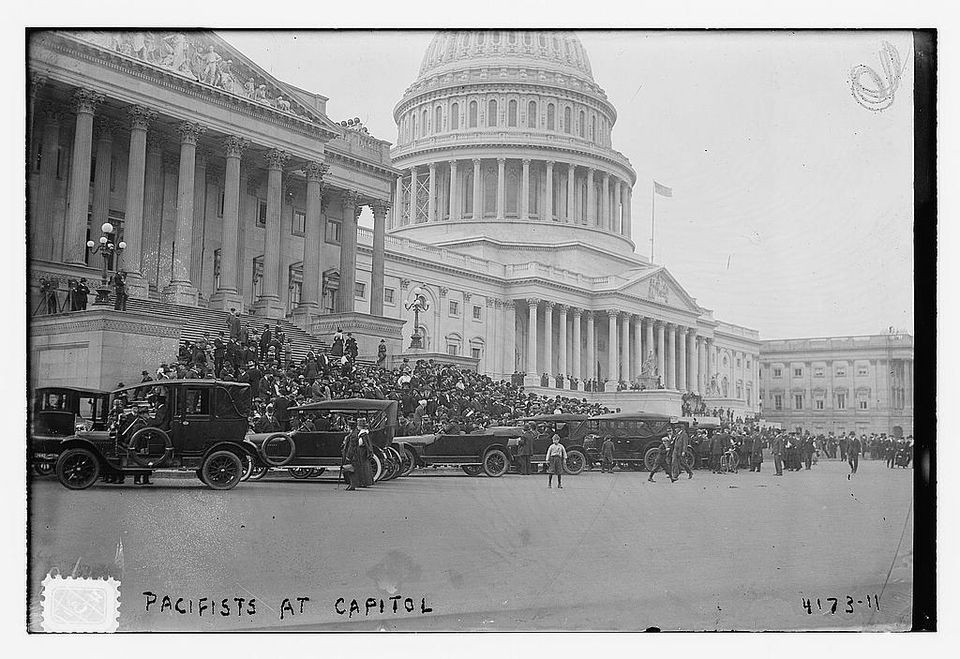
April 3, 1917 Pacifists gather at the Capitol in April 1917, as Congress debated the declaration of war. The CapitolBain News Service, Library of Congress · LC-B2- 4173-11 [P&P] · No known restrictions on publication -
1918
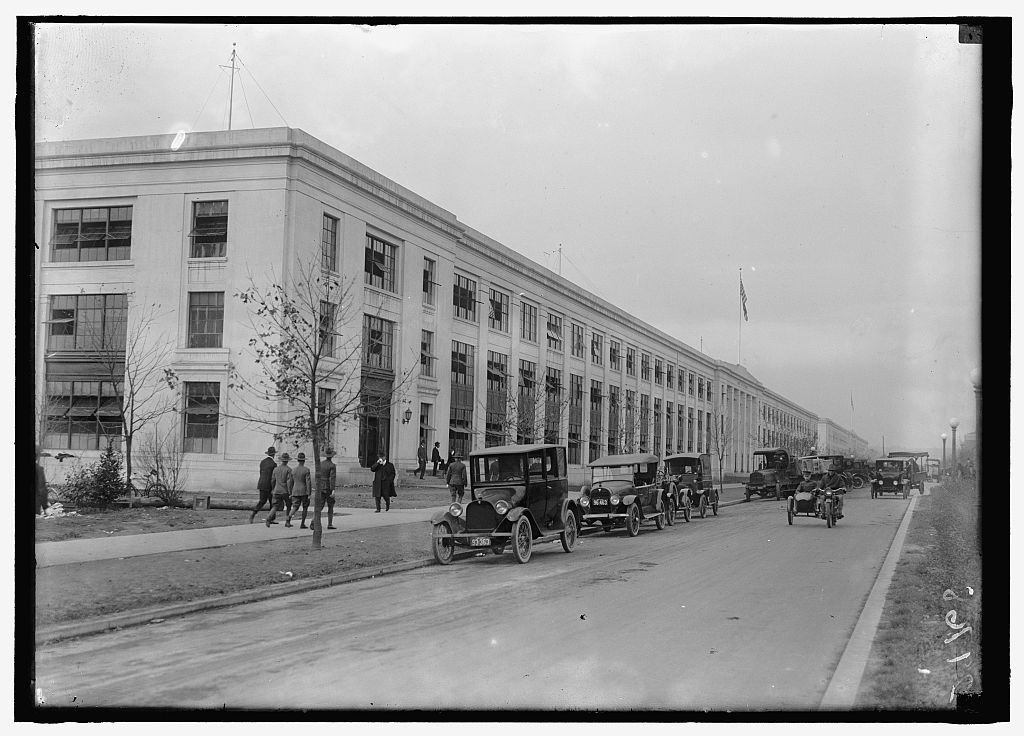
Wartime city
The vast "temporary" Main Navy and Munitions buildings go up along B Street (now Constitution Avenue) for the Navy and War departments; they stand until 1970. In the autumn the influenza pandemic reaches the city. The war ends with the Armistice on November 11.
Place: The Mall · Checked against: Wikipedia, “Main Navy and Munitions Buildings”
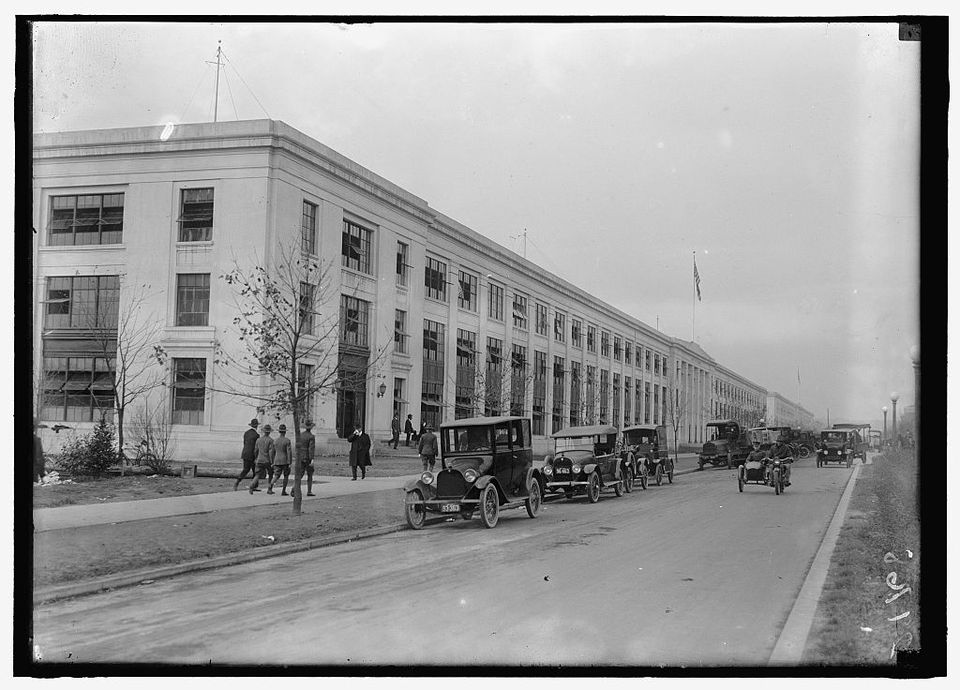
1918 The new Navy Department building on B Street at 17th, 1918, with motor cars along the kerb. The MallHarris & Ewing Collection, Library of Congress · LC-H261- 29768 [P&P] · No known restrictions on publication -
1919
July 19-24, 1919
The Washington race riot
During the "Red Summer" of racial violence across the country, Washington newspapers run a sensational campaign about alleged assaults on white women. From July 19 white mobs, many of them servicemen, attack Black residents across the city, pulling people from streetcars and beating them in the streets. When the police fail to protect them, Black Washingtonians arm themselves and defend their neighbourhoods, especially around Seventh and U Streets. President Wilson orders in some 2,000 federal troops, and a heavy rainstorm helps end the violence. Official reports count 15 dead, and other estimates run as high as 40; about 150 people are injured. The riot is remembered for the way Black residents fought back.
Place: U Street and Shaw · Checked against: Wikipedia, “Washington race riot of 1919”
-
1919
September 17, 1919
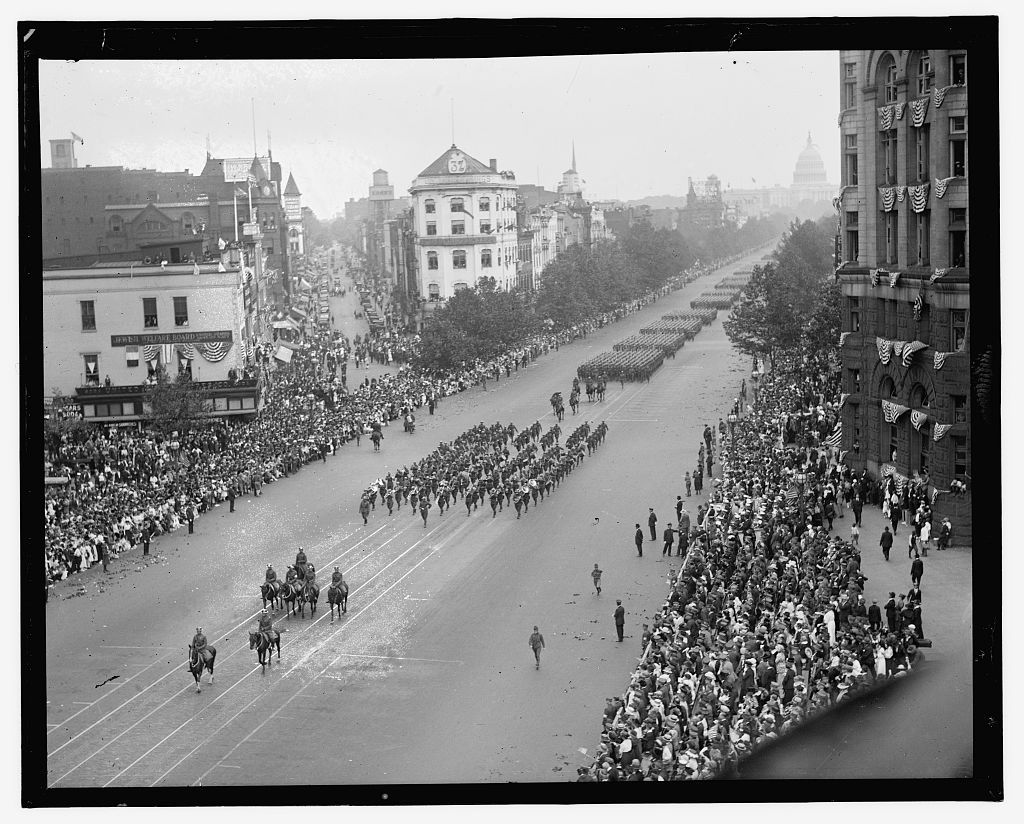
Pershing's victory parade
General John J. Pershing leads the First Division along Pennsylvania Avenue in a victory parade through the capital.
Place: Pennsylvania Avenue · Checked against: Wikipedia, “John J. Pershing”
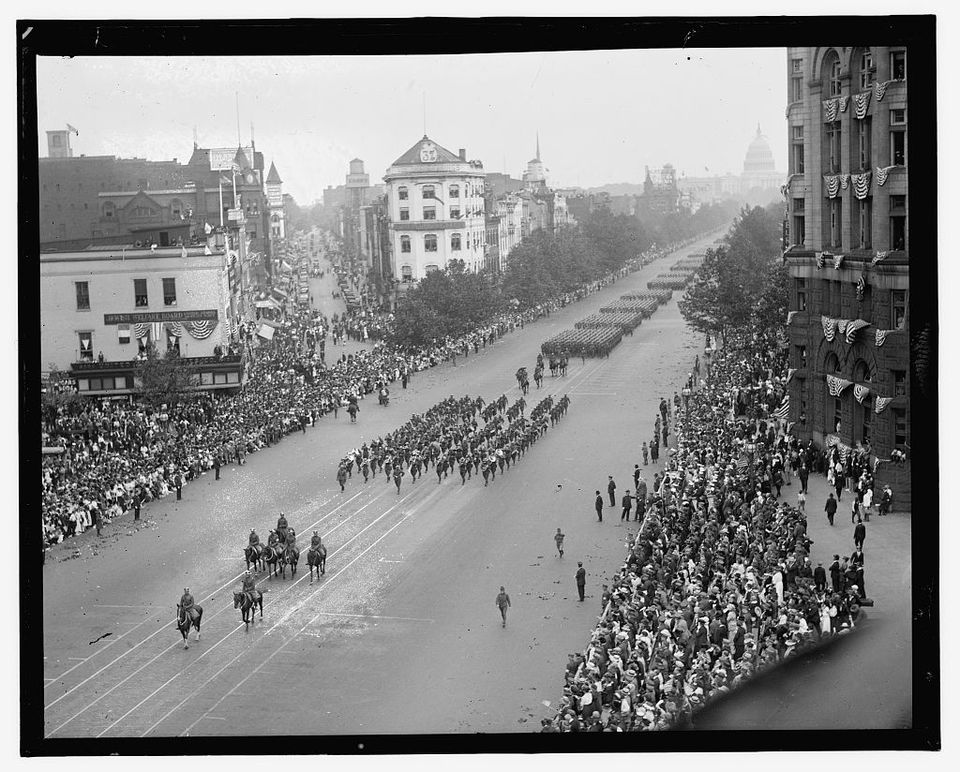
September 17, 1919 Pershing's victory parade fills Pennsylvania Avenue, 1919, between packed stands and pavements. Pennsylvania AvenueDate checked: The Library dates this 1909–1923; Pershing's victory parade on Pennsylvania Avenue was on September 17, 1919.National Photo Company Collection, Library of Congress · LC-F8- 44238 [P&P] · No known restrictions on publication
The 1920s
-
1920
August 1920
Women win the vote
Tennessee's ratification on August 18 completes the Nineteenth Amendment, and its adoption is certified in Washington on August 26 by Secretary of State Bainbridge Colby. Residents of the District itself, men and women, still cannot vote for president: that comes only with the Twenty-third Amendment in 1961.
Checked against: Wikipedia, “Nineteenth Amendment to the United States Constitution”
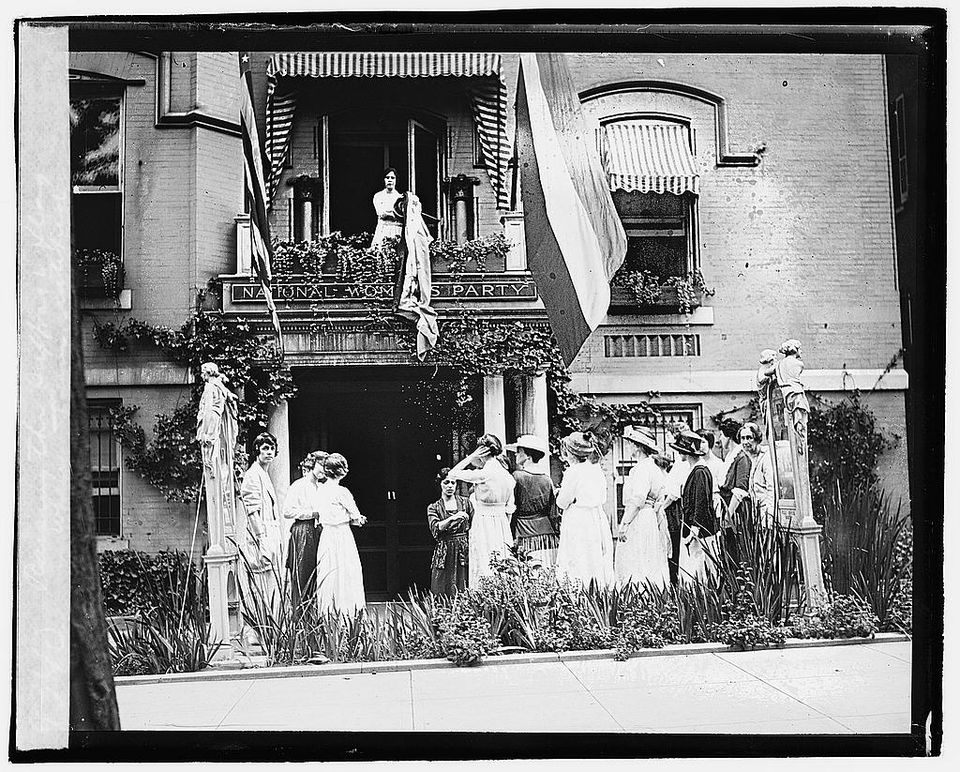
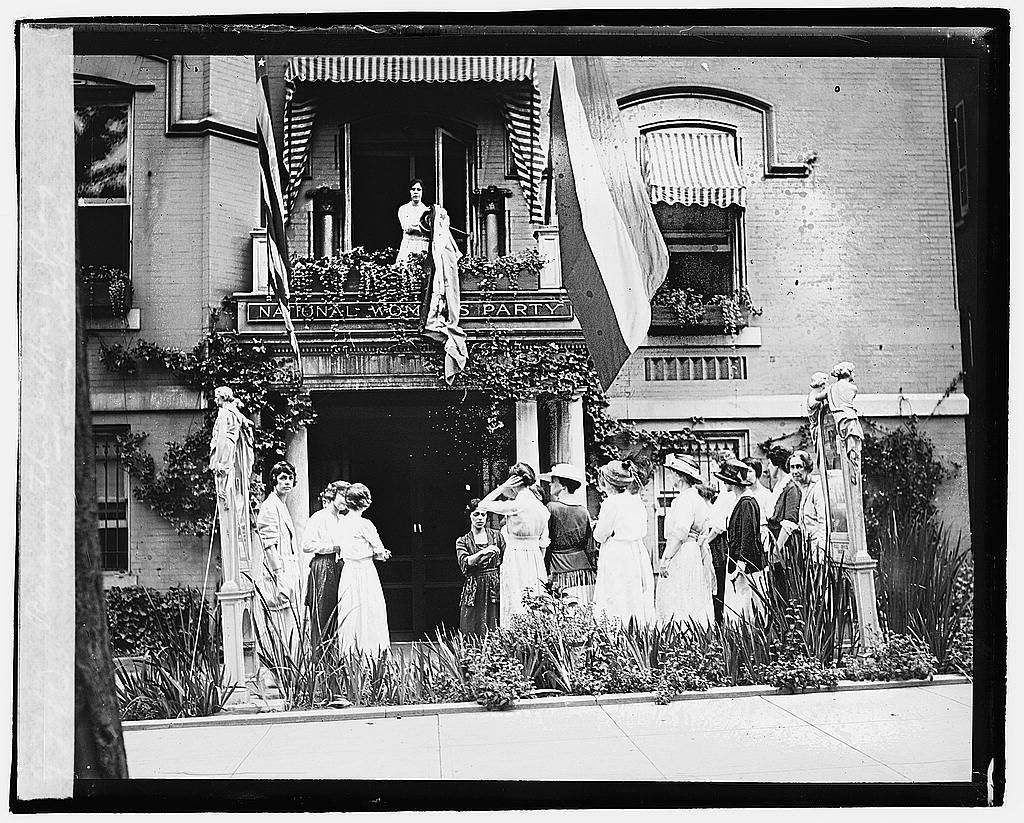
1920 Women of the National Woman's Party unfurl their tricolour banner from the balcony of their headquarters on Lafayette Square to mark the ratification of the Nineteenth Amendment, 1920. The White House and Lafayette Square place probableNational Photo Company Collection, Library of Congress · LC-F8- 9340 [P&P] · No known restrictions on publication -
1920
A city of 437,571
The census counts 437,571 people, a rise of a third in ten years, most of it from wartime government work.
Checked against: Wikipedia, “Demographics of Washington, D.C.”
-
1921
March 4, 1921
Harding inaugurated
Warren G. Harding takes the oath on the Capitol's east portico, and becomes the first president to ride to and from his inauguration in an automobile.
Place: The Capitol · Checked against: Wikipedia, “Inauguration of Warren G. Harding”
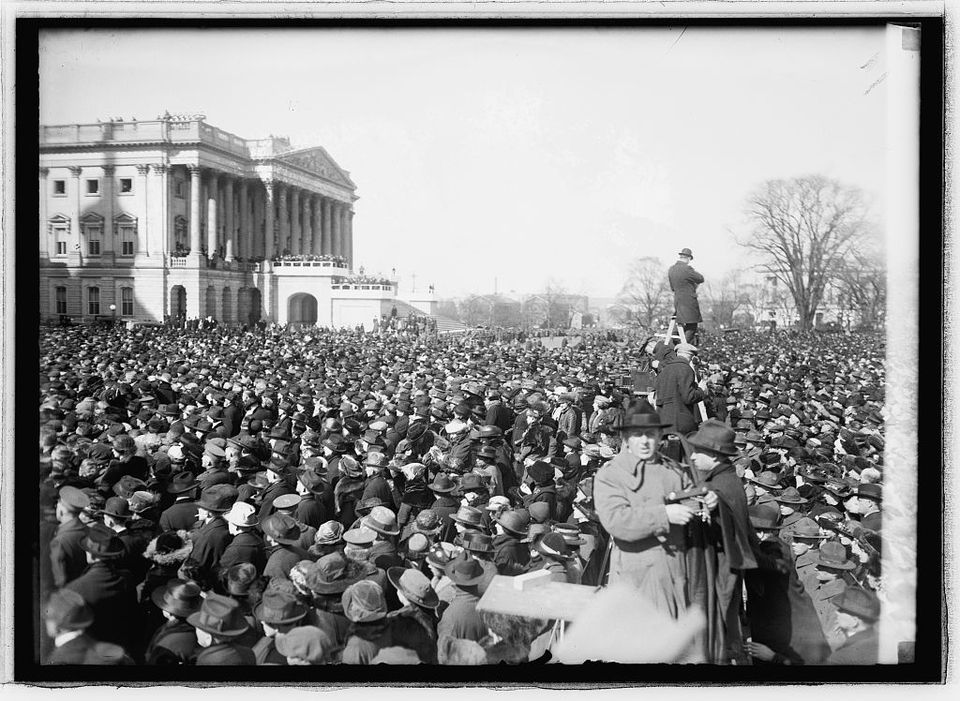
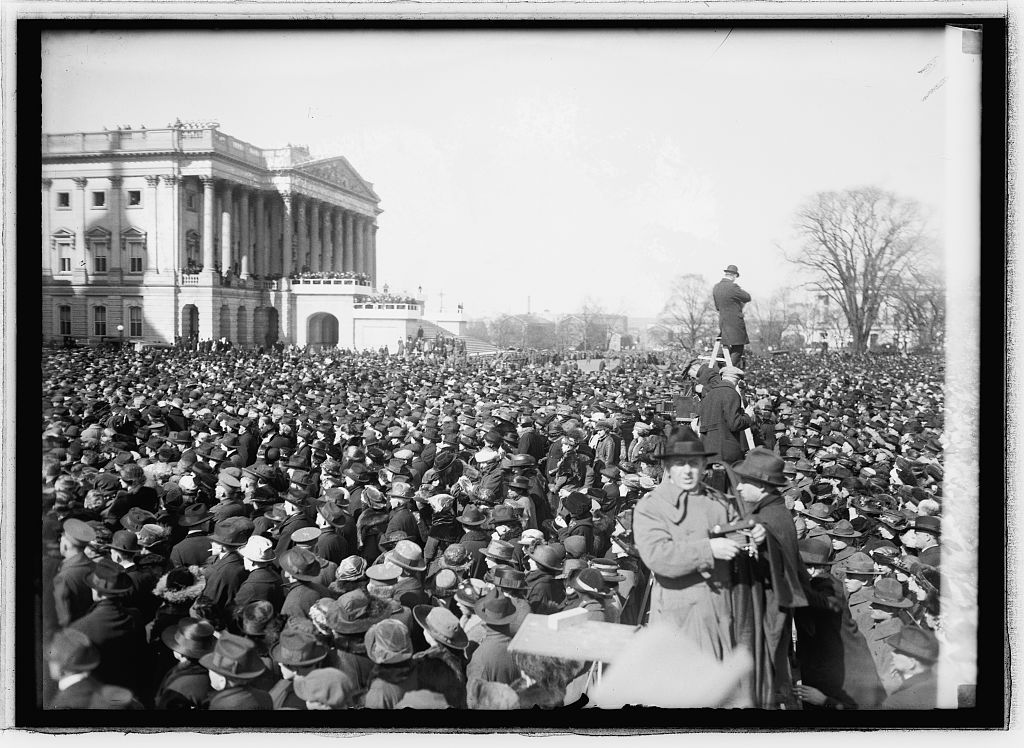
March 4, 1921 Crowds pack the Capitol plaza for Warren Harding's inauguration, March 4, 1921. The CapitolDate checked: The Library gives 1921; Harding's inauguration, which these crowds came for, was on March 4, 1921.National Photo Company Collection, Library of Congress · LC-F81- 12374 [P&P] · No known restrictions on publication -
1921
November 11, 1921
The Unknown Soldier
An unidentified American soldier brought back from France, after lying in state in the Capitol rotunda, is buried at Arlington National Cemetery in front of the new Memorial Amphitheater. The next day the Washington Naval Conference opens at Memorial Continental Hall.
Checked against: Wikipedia, “Tomb of the Unknown Soldier (Arlington National Cemetery)”
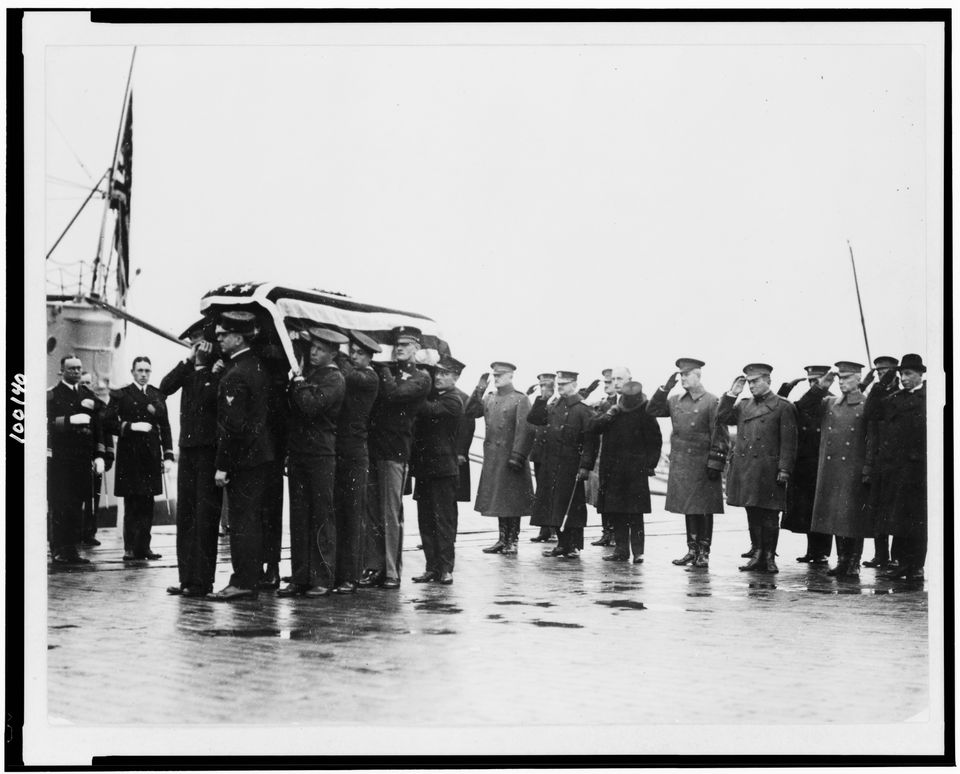
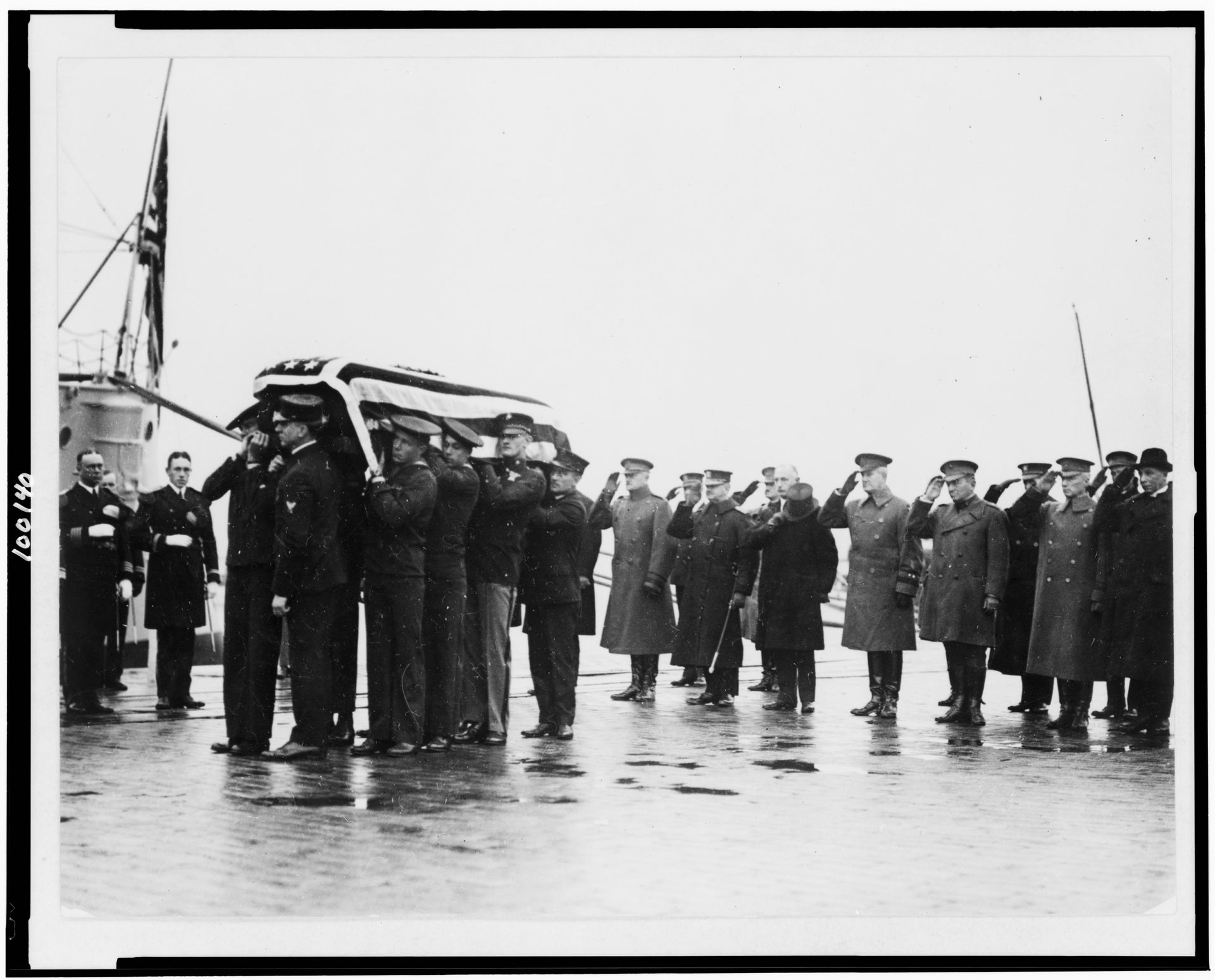
1921 Leaders of state, army and navy salute as the casket of the Unknown Soldier is carried ashore, November 9, 1921. The Navy Yard place probableNational Photo Company Collection, Library of Congress · LOT 12354-3 <item> [P&P] · No known restrictions on publication -
1921
The Dupont Circle fountain
A marble fountain by Daniel Chester French and Henry Bacon is dedicated in May, replacing the bronze statue of Admiral Samuel Du Pont that had stood in the circle since 1884.
Place: Dupont Circle and the avenues · Checked against: Wikipedia, “Dupont Circle Fountain”
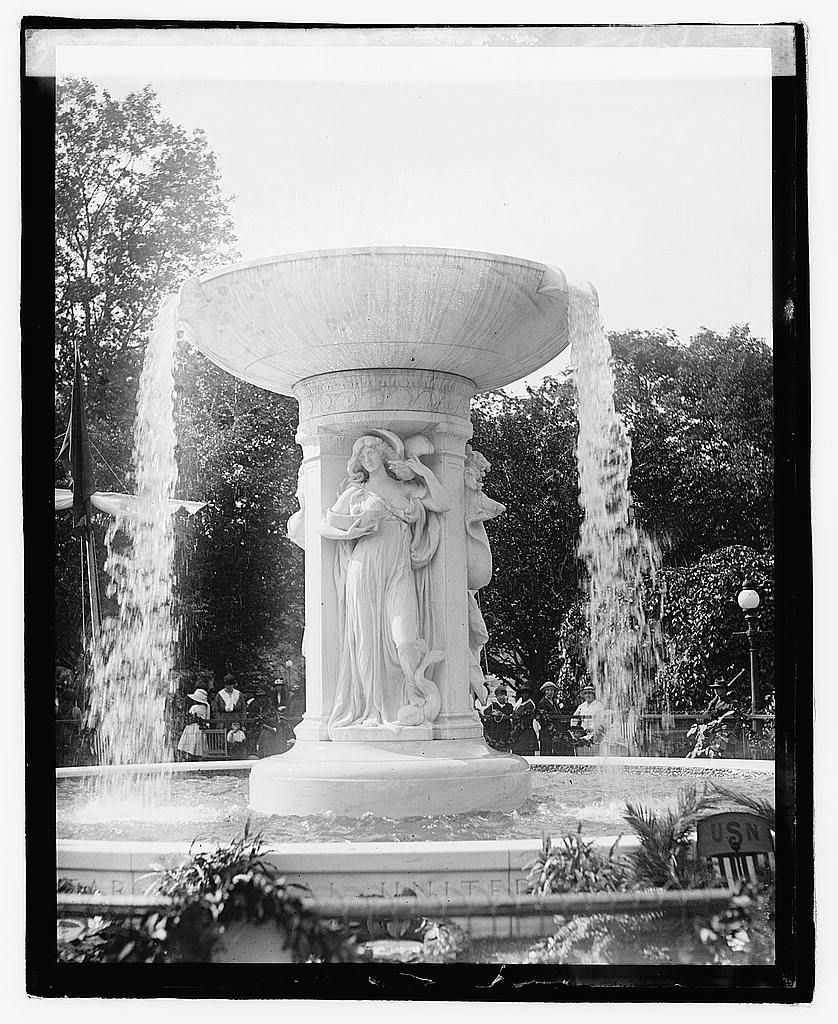
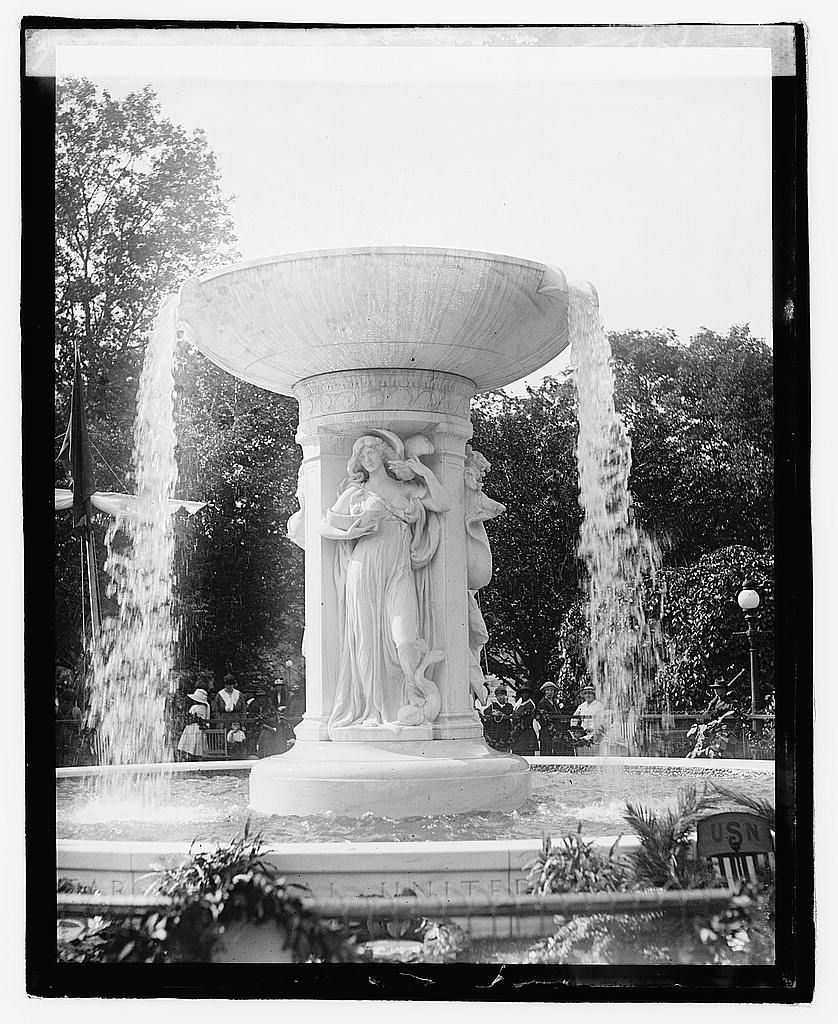
May 17, 1921 The new Du Pont memorial fountain in Dupont Circle, water spilling from its marble basin, May 17, 1921. Dupont Circle and the avenuesNational Photo Company Collection, Library of Congress · LC-F8- 14100 [P&P] · No known restrictions on publication -
1922
January 28, 1922
The Knickerbocker Theatre disaster
During a two-day blizzard that leaves more than two feet of snow, the flat roof of the Knickerbocker Theatre at 18th Street and Columbia Road collapses under the weight during an evening film. Ninety- eight people are killed and 133 injured, the worst disaster in the city's history. The investigations that followed blamed the roof's design.
Place: The Knickerbocker Theatre · Checked against: Wikipedia, “Knickerbocker Theatre (Washington, D.C.)”
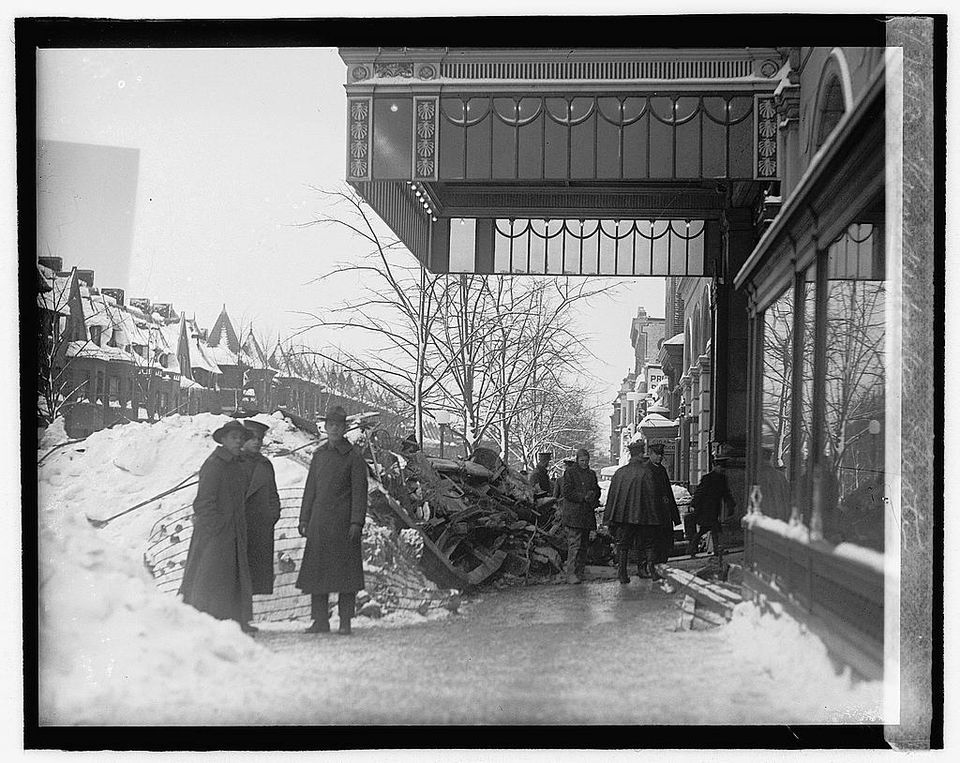
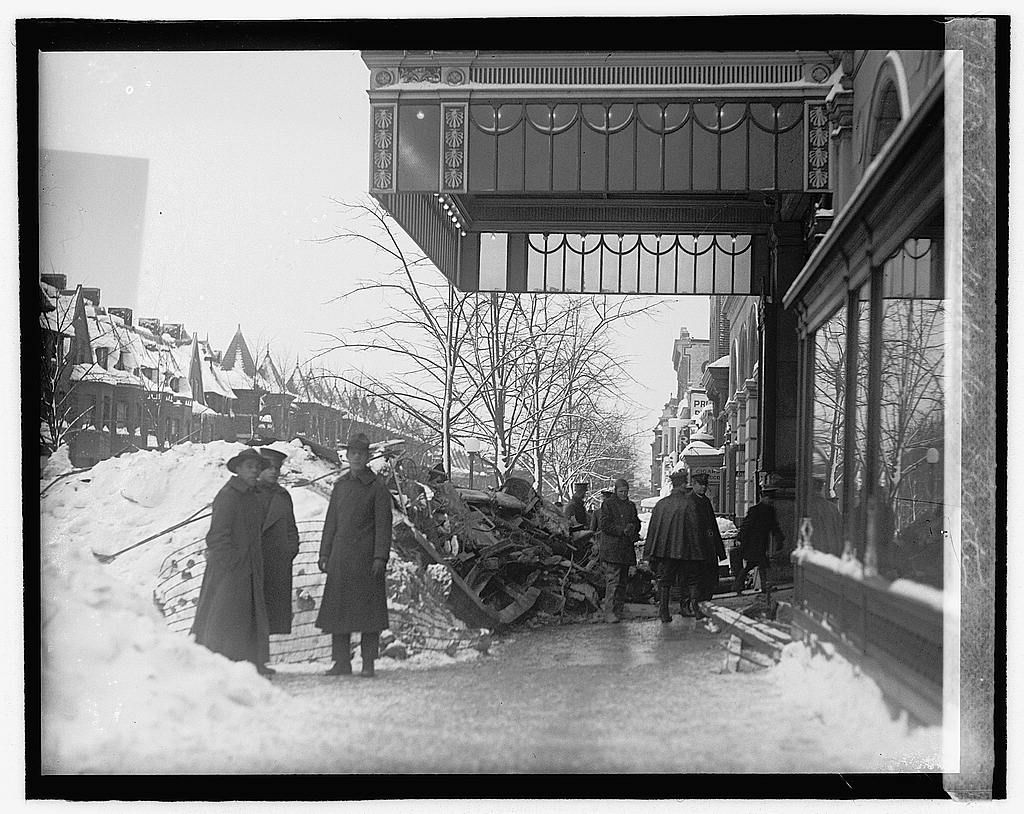
January 28–29, 1922 Rescuers and wreckage under the Knickerbocker Theatre's canopy after the roof collapsed, January 1922. The Knickerbocker TheatreDate checked: The Library gives only 1922; the theatre's roof fell on the night of January 28, 1922, and the rescue went on into the next day.National Photo Company Collection, Library of Congress · LC-F8- 17913 [P&P] · No known restrictions on publication -
1922
May 30, 1922
The Lincoln Memorial is dedicated
Chief Justice William Howard Taft presents the memorial and President Harding accepts it. Robert Russa Moton of the Tuskegee Institute gives the keynote address, but Black guests in the audience are seated in a separate, segregated section.
Place: The Lincoln Memorial · Checked against: Wikipedia, “Lincoln Memorial”
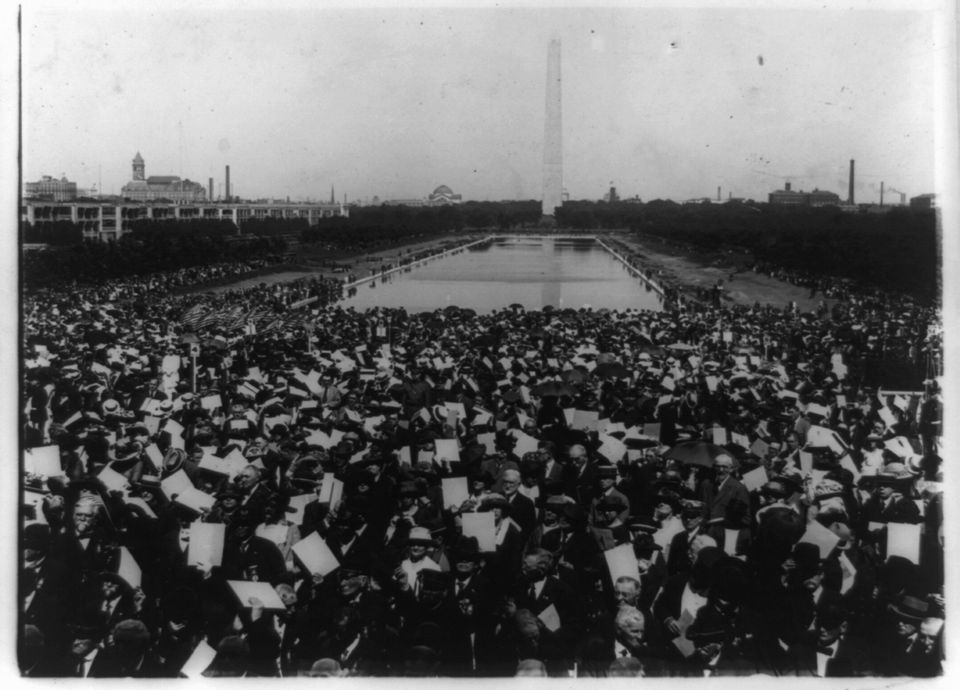
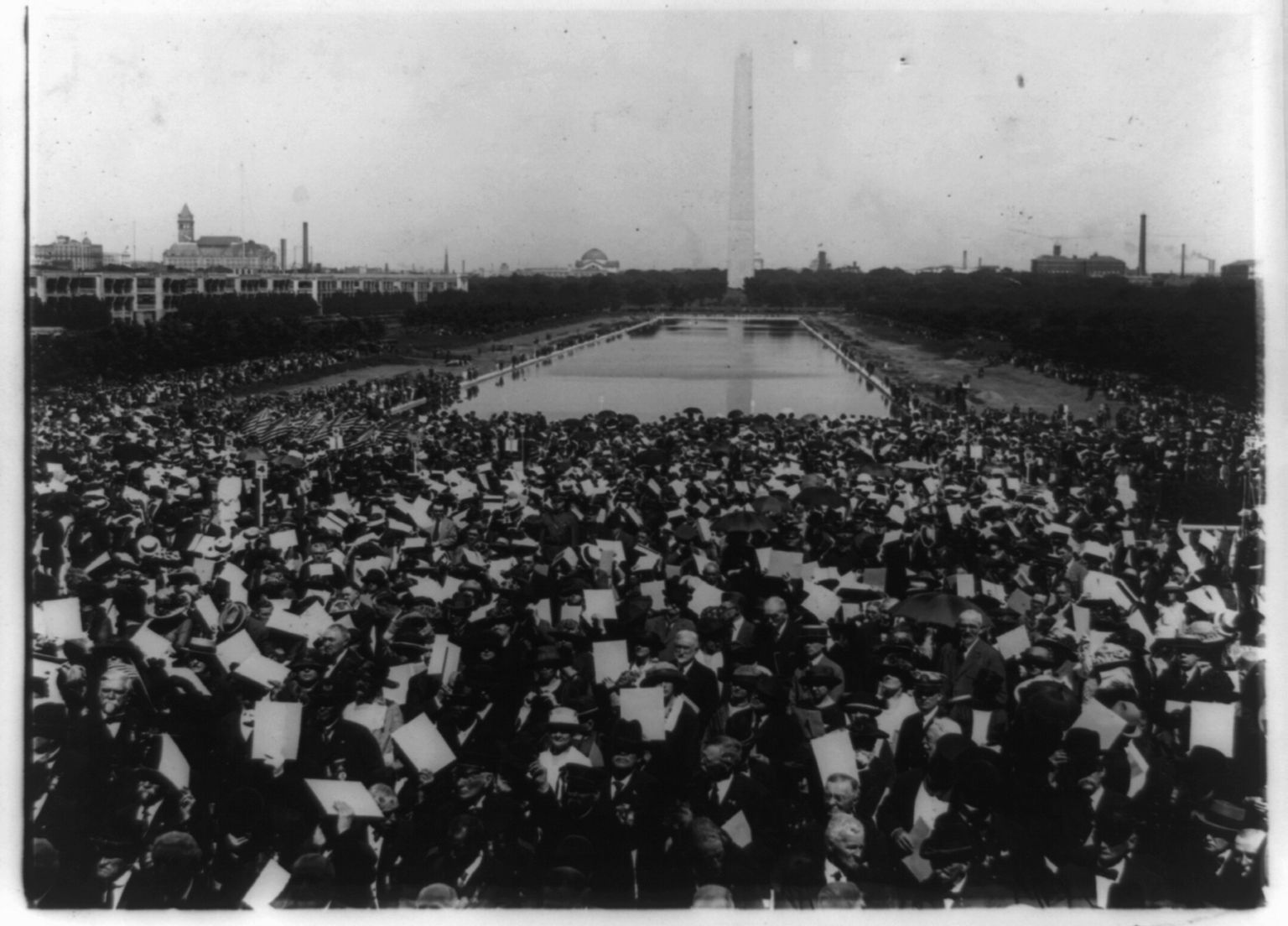
1922 The crowd at the dedication of the Lincoln Memorial, 1922, looking east along the unfinished Reflecting Pool to the Washington Monument. The Lincoln MemorialNational Photo Company Collection, Library of Congress · LOT 12294, vol. 5, p. 53 <item> [P&P] · No known restrictions on publication -
1923
January 17, 1923
Key Bridge opens
The Francis Scott Key Bridge opens between Georgetown and Rosslyn, and the old Aqueduct Bridge beside it closes; its superstructure is torn down from 1933.
Place: Georgetown · Checked against: Wikipedia, “Key Bridge (Washington, D.C.)”
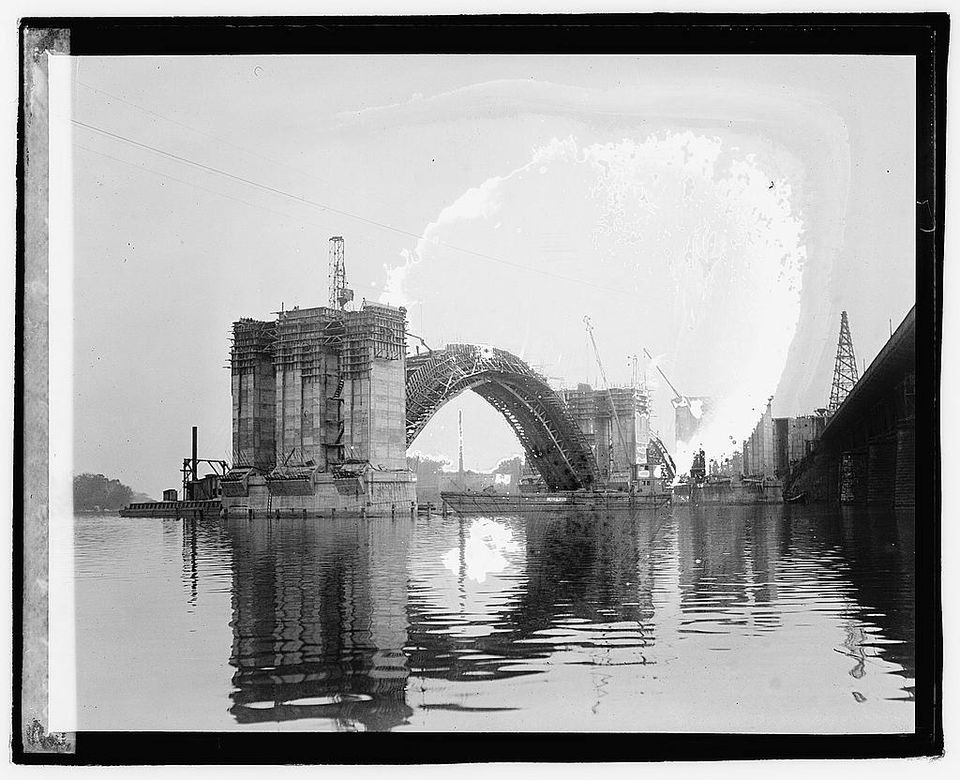
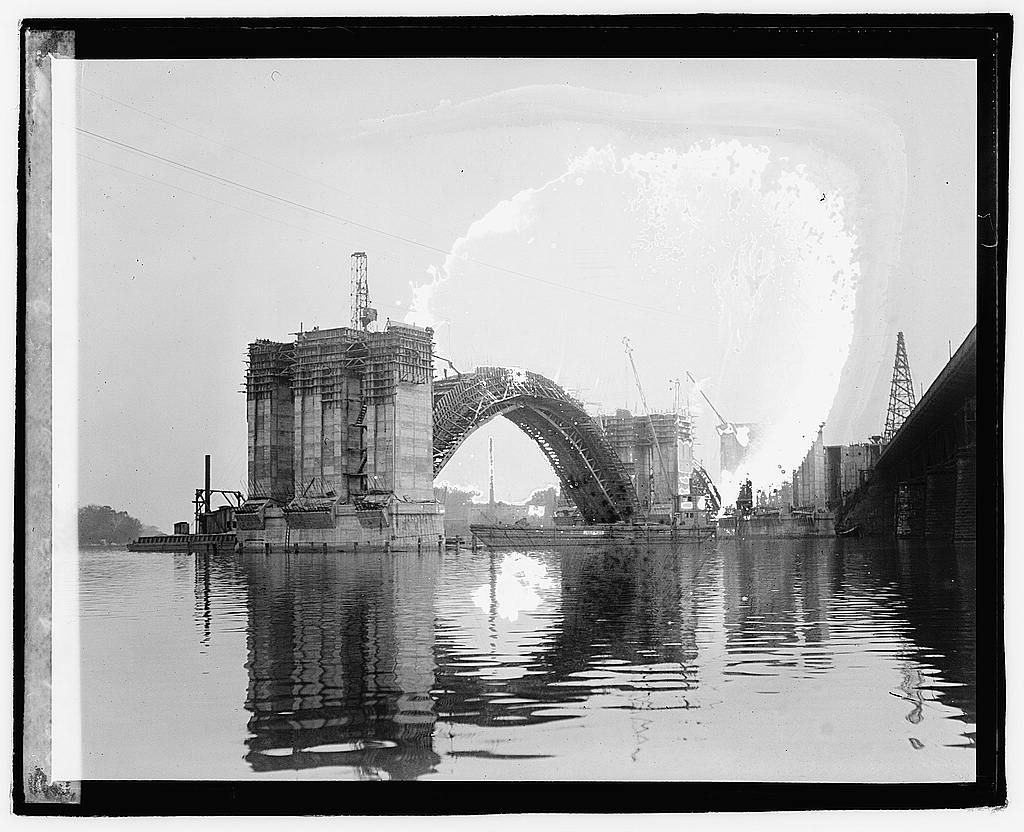
1920 Arches of the Key Bridge rise over the Potomac beside the old Aqueduct Bridge, around 1920. GeorgetownNational Photo Company Collection, Library of Congress · LC-F8- 10306 [P&P] · No known restrictions on publication -
1923
August 1923
Harding's funeral
President Harding dies in San Francisco on August 2. His body is brought back to Washington by train, past crowds along the tracks, and lies in state in the Capitol rotunda; the funeral procession passes the White House, and he is buried in Marion, Ohio.
Place: The Capitol · Checked against: Wikipedia, “Warren G. Harding”
-
1923
May 1923
The Freer Gallery opens
The Freer Gallery of Art, founded by the Detroit industrialist Charles Lang Freer, opens on the Mall on May 9: the Smithsonian's first museum devoted to the fine arts.
Place: The Mall · Checked against: Wikipedia, “Freer Gallery of Art”
-
1924
October 10, 1924
Washington wins the World Series
The Senators beat the New York Giants in the twelfth inning of the seventh game at Griffith Stadium. It is the only World Series the Senators win in Washington.
Checked against: Wikipedia, “1924 World Series”
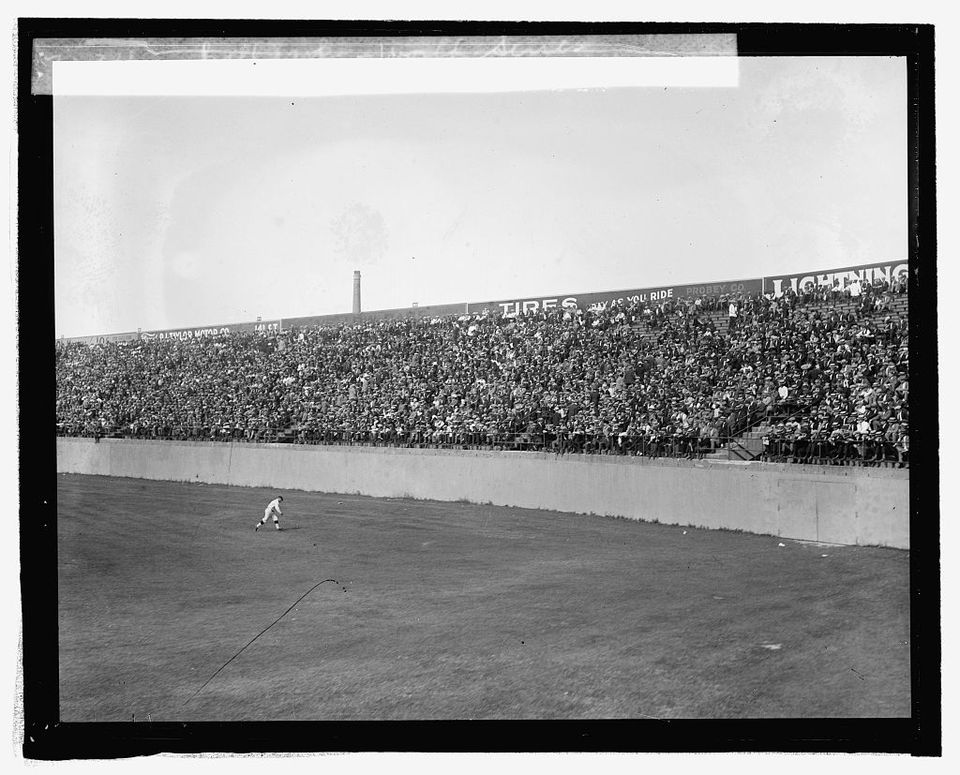
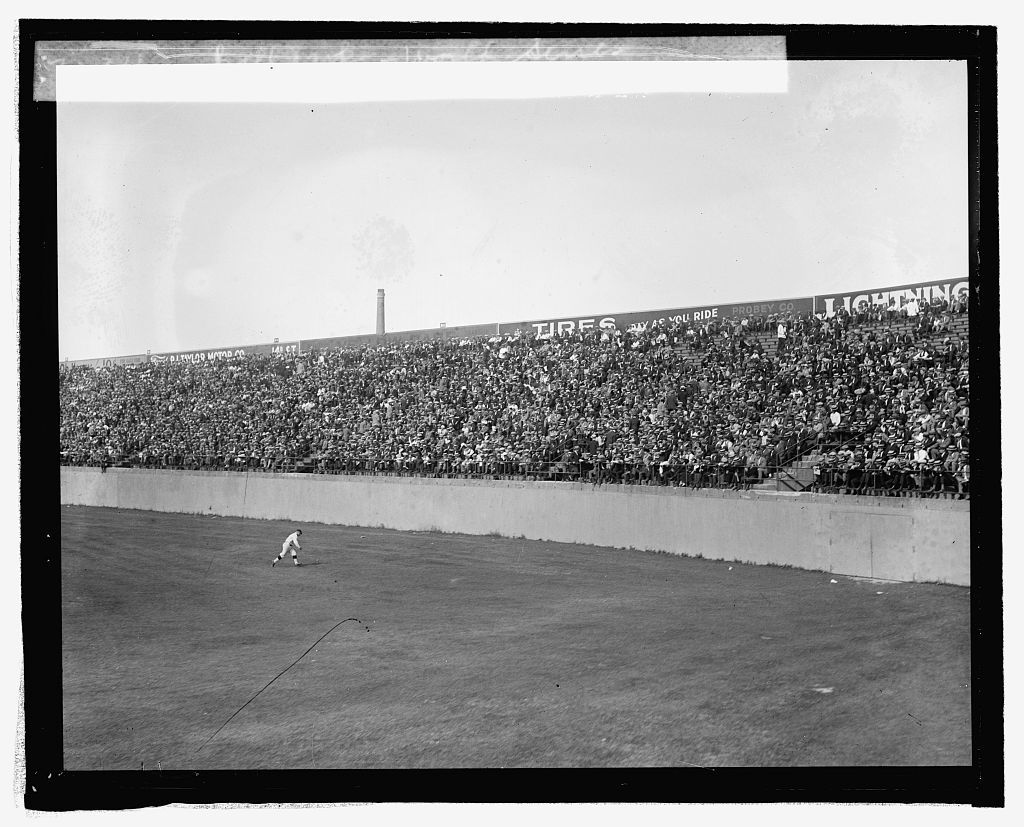
October 1924 Crowds in the stands at Griffith Stadium for the 1924 World Series. Griffith StadiumNational Photo Company Collection, Library of Congress · LC-F8- 32316 [P&P] · No known restrictions on publication -
1925
March 4, 1925
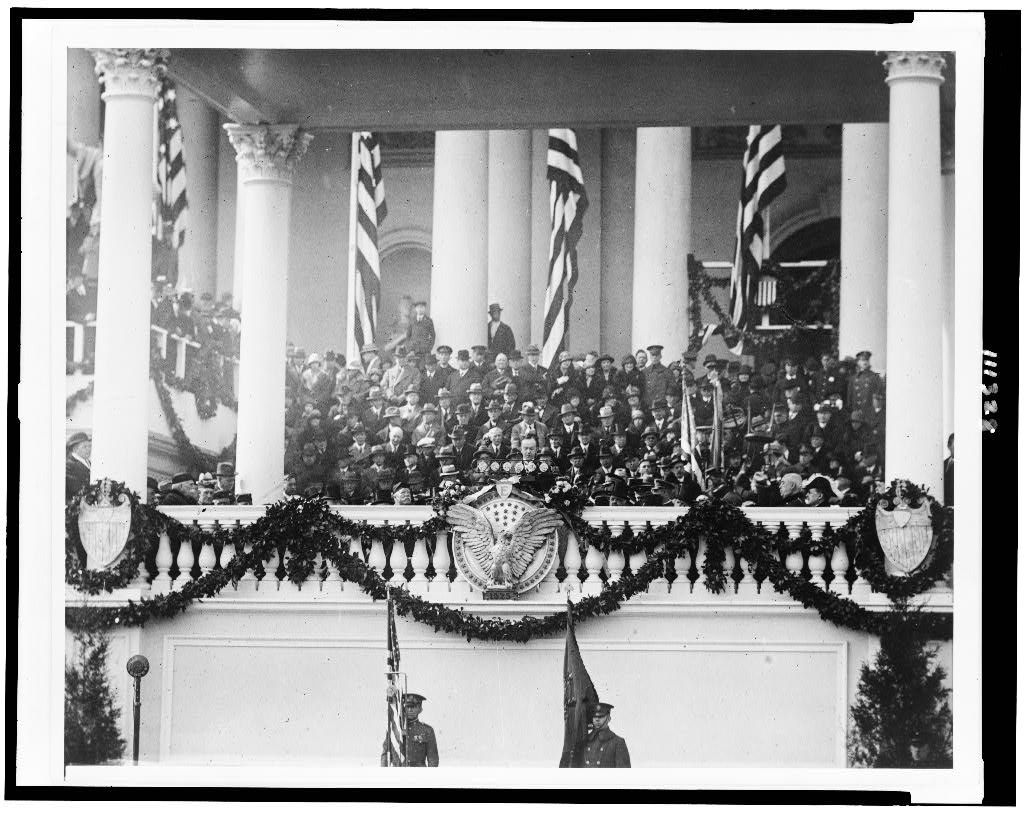
Coolidge's radio inauguration
Calvin Coolidge's inauguration is the first broadcast nationwide by radio.
Place: The Capitol · Checked against: Wikipedia, “Second inauguration of Calvin Coolidge”
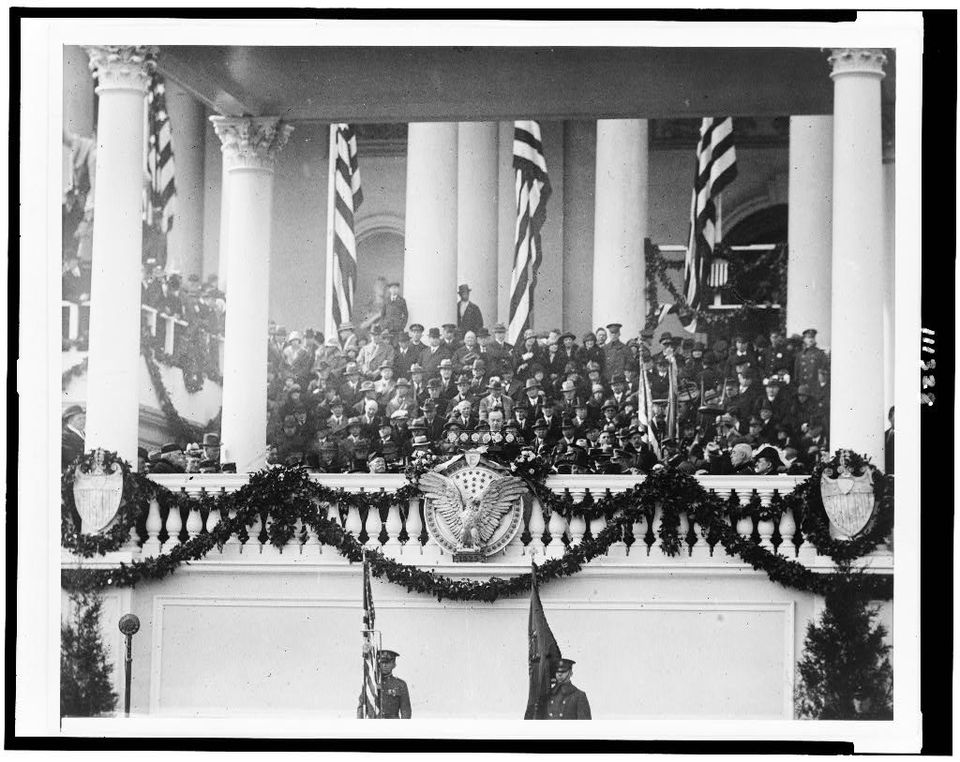
1925 Calvin Coolidge delivers his inaugural address on the Capitol's east front, March 4, 1925. The CapitolNational Photo Company Collection, Library of Congress · LOT 12340-1 <item> [P&P] · No known restrictions on publication -
1925
August 8, 1925
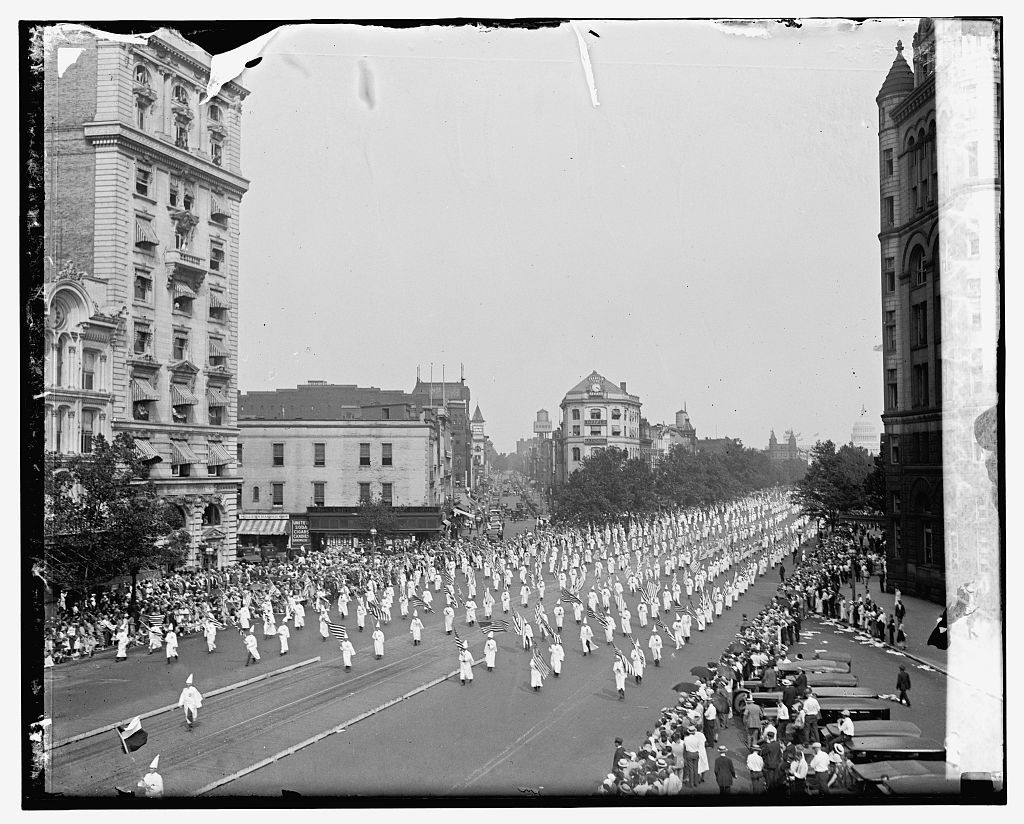
The Klan on Pennsylvania Avenue
Some 30,000 members of the Ku Klux Klan march down Pennsylvania Avenue in robes, at the peak of the organisation's 1920s revival: the largest march in its history, organised by its leader Hiram Wesley Evans after he moved the Klan's headquarters to Washington.
Place: Pennsylvania Avenue · Checked against: Wikipedia, “Hiram Wesley Evans”
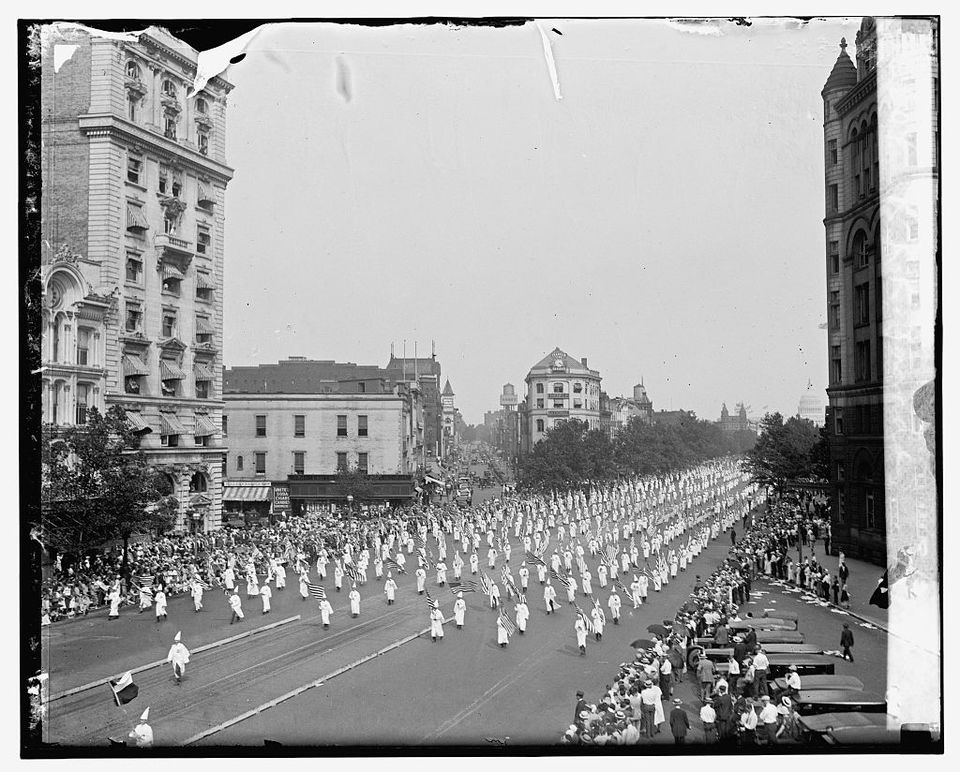
August 8, 1925 Members of the Ku Klux Klan march down Pennsylvania Avenue, August 8, 1925, at the height of the organisation's 1920s revival. Pennsylvania AvenueNational Photo Company Collection, Library of Congress · LC-F8- 36604 [P&P] · No known restrictions on publication -
1926
Planning the Federal Triangle
Congress passes the Public Buildings Act, which authorises a great group of government buildings between Pennsylvania Avenue and B Street. Over the next decade the old blocks south of the avenue, including Center Market, are cleared for the Federal Triangle and the National Archives.
Place: Center Market · Checked against: Wikipedia, “Federal Triangle”
-
1927
June 11, 1927
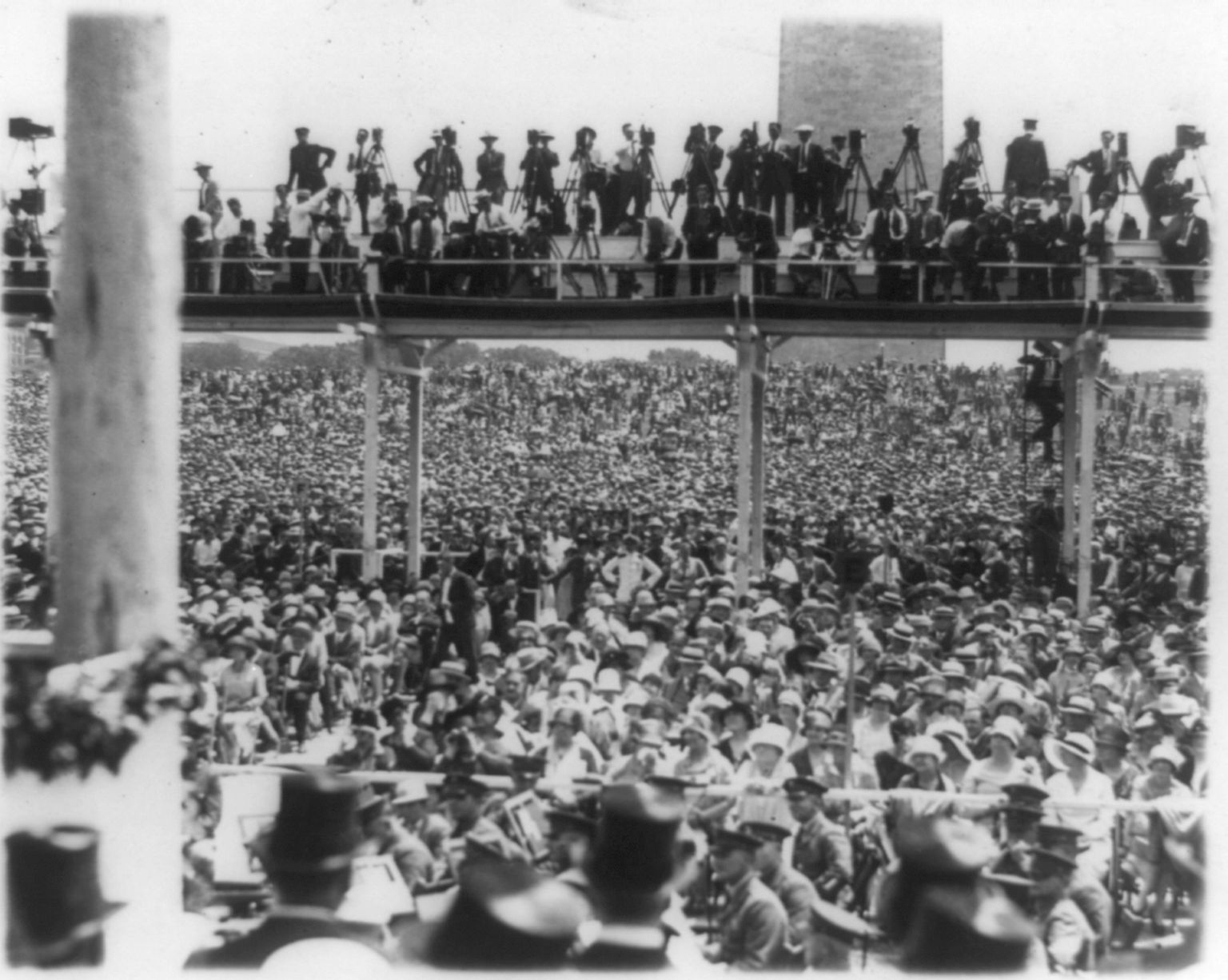
Lindbergh comes home
Charles Lindbergh, back from his solo flight to Paris, is escorted up the Potomac by warships and aircraft, welcomed by enormous crowds, and presented with the Distinguished Flying Cross by President Coolidge.
Place: The Washington Monument · Checked against: Wikipedia, “Charles Lindbergh”
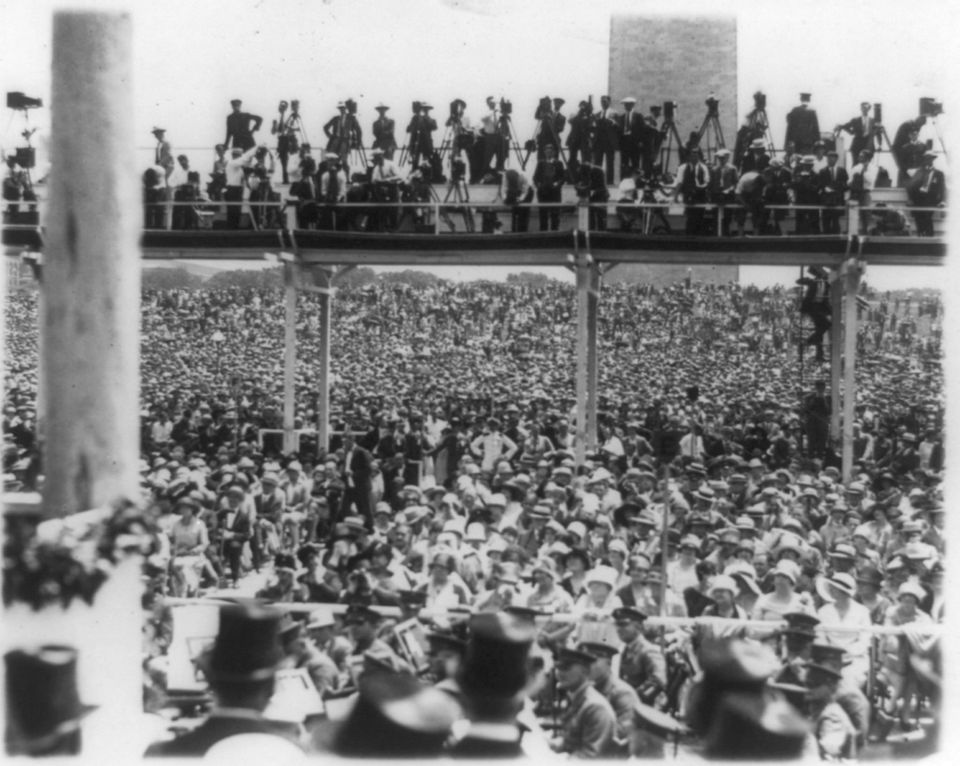
June 11, 1927 Enormous crowds on the Monument grounds welcome Charles Lindbergh home, June 11, 1927. The Washington MonumentNational Photo Company Collection, Library of Congress · LOT 12299 v.2, p. 2 [item] [P&P] · No known restrictions on publication -
1929
December 24, 1929
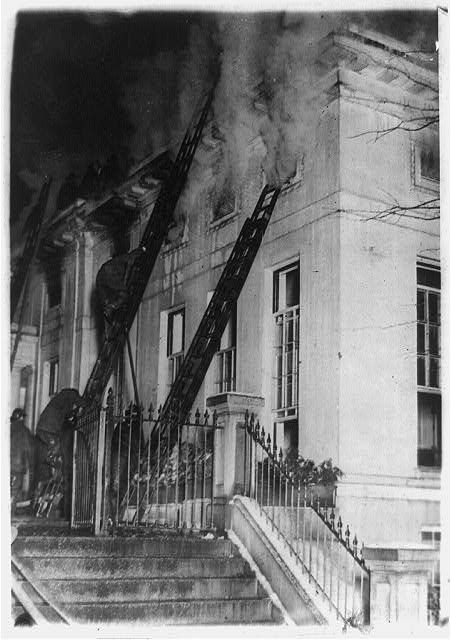
Fire in the West Wing
A four-alarm fire on Christmas Eve badly damages the West Wing of the White House. It is rebuilt, and President Hoover and his staff move back in on April 14, 1930.
Place: The White House and Lafayette Square · Checked against: Wikipedia, “West Wing”
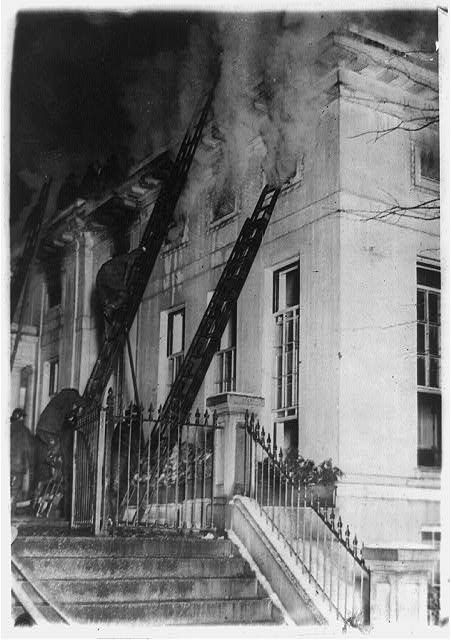
December 24, 1929 Firemen on ladders at the West Wing of the White House during the Christmas Eve fire of 1929. The White House and Lafayette SquareDate checked: The Library's record says December 26, 1929, but the West Wing fire this photograph shows broke out on Christmas Eve, December 24.National Photo Company Collection, Library of Congress · LOT 12299, vol. 4, p. 18 <item> [P&P] · No known restrictions on publication
The 1930s
-
1930
A city of 486,869
The census counts 486,869 people. In 1931 B Street becomes Constitution Avenue and Center Market is torn down, and the Federal Triangle is rising: the city in these photographs is giving way to the one we know.
Checked against: Wikipedia, “Demographics of Washington, D.C.”